When considering some of the most influential producers leading the charge for Austrian wine, the list is long: Roland Velich, Christian Tschida, Heike and Gernot Heinrich, Gut Oggau, Rennersistas, and on it goes. What do they have in common? They’re all from Burgenland.
For a region that didn’t exist as such until a century ago, Burgenland has emerged as a defining force in Austrian wine. It’s a dramatic shift from just 30 years ago, when Burgenland was poor and peripheral, still shaking off the effects of the Iron Curtain that ran along its eastern edge.
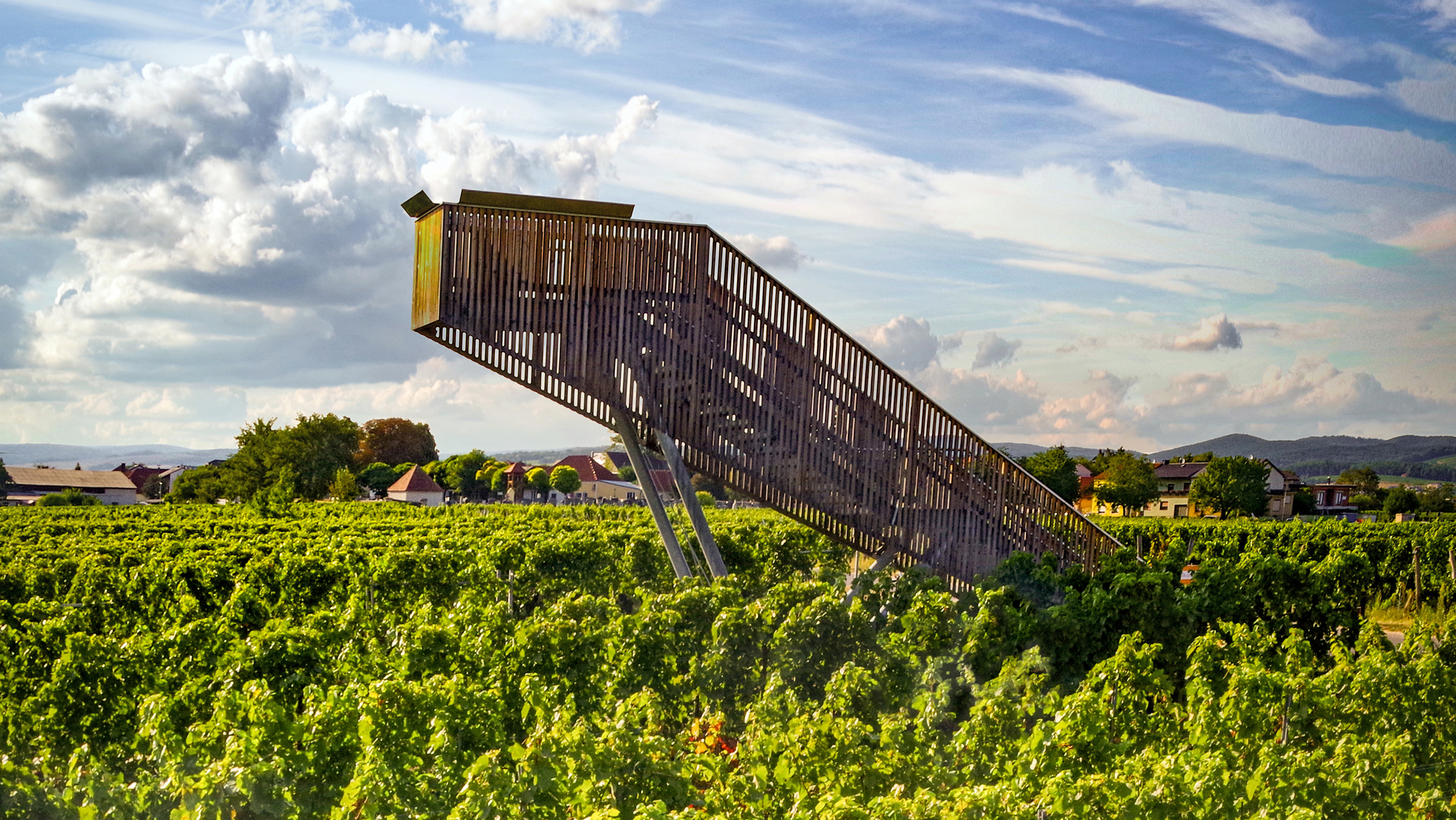
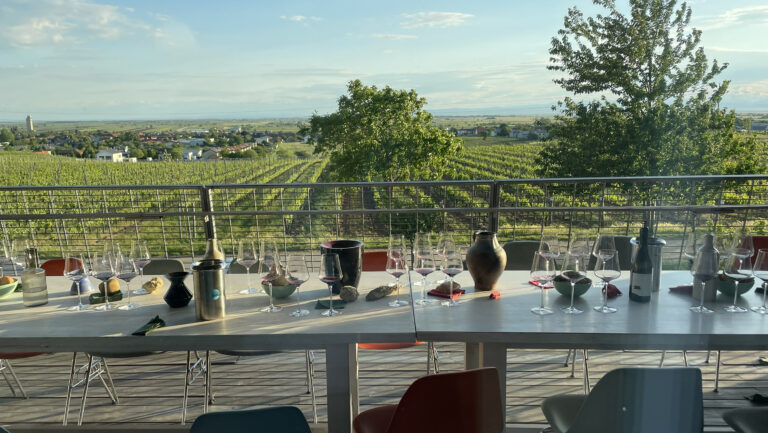
Today, Burgenland feels prosperous. Architecturally arresting wineries and well-kept towns dot the landscape. Wine tourism is an important economic driver in Austria’s second-largest wine region. Most notably, Burgenland has a remarkable density of quality producers working out nuances of terroir, detail, and style in their wines.
From Borderland to Investment Zone
Burgenland is an anomaly in Austrian wine in nearly every respect. That starts with its history. At the end of World War I, Burgenland—the name for a region that was until then Hungarian territory—was ceded to Austria. After World War II, the newly Austrian region was occupied by the Soviets. Choked off from western aid, Burgenland suffered. In 1955, Burgenland was freed from occupation only to have the Iron Curtain drop along its eastern edge and remain there for decades.
After Austria’s entry into the European Union in 1995, Burgenland was named an Objective 1 investment area. The present-day equivalent of more than €1 billion poured in. “EU funding, specifically Objective 1 funding, was of the utmost importance to the wine industry,” says Andrea Weinberger, a project manager for the Wein Burgenland regional association. Christian Zechmeister, the outgoing managing director of the organization, says a direct line can be drawn between these transformative investments and the proliferation of state-of-the-art wineries and high-profile wines that have come to define Burgenland.

Don’t miss the latest drinks industry news and insights. Sign up for our award-winning newsletters and get insider intel, resources, and trends delivered to your inbox every week.
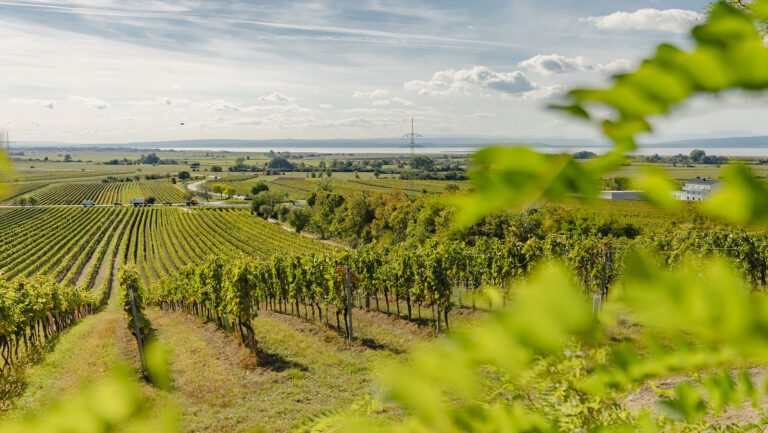
The region stretches out long and low, south and east of Vienna, bracketed between the last foothills of the Alps and the expanse of the Pannonian plain. While still considered part of Austria’s cool climate, Burgenland has exceptionally warm, dry, protracted growing seasons. But its historic varieties, especially Blaufränkisch, Welschriesling, and Furmint, were planted for these conditions: drought-tolerant, late-ripening, and able to retain acidity and moderate alcohol levels.
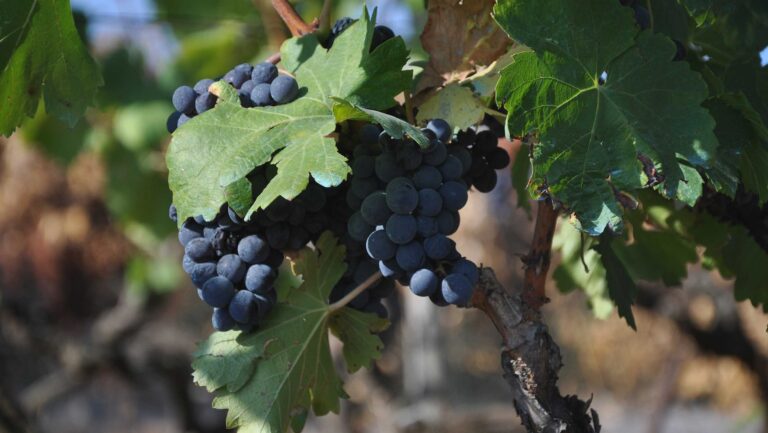
Finally, Burgenland is a red-wine region in a white-wine country. It is synonymous with Blaufränkisch (94 percent of Austria’s plantings of the grape are here). Zweigelt and Sankt Laurent play key supporting roles. Austria’s most famous and most produced white variety Grüner Veltliner only accounts for nine percent of plantings in Burgenland, whereas whites like Welschriesling, Chardonnay, Pinot Blanc, and Furmint play a more significant commercial and cultural role.
Finding a Regional Voice
“From my perspective, what made Burgenland revolutionary was not that it sought to be radical, but that it sought to become more authentic,” says Stephan Schindler, an Austrian native and the co-owner of California-based importer Winemonger, which focuses primarily on Austrian wine. He tells the story of a cluster of producers, including Roland Velich of Moric (whom he represents) and Christian Tschida, who, in the early 2000s, “stopped asking how Burgenland could produce a better Bordeaux or Super Tuscan and instead asked a much more fundamental question: What can Burgenland express that is unique to Burgenland and its terroir?”
The answer, Schindler says, was already there in forgotten vineyards, old vines, and indigenous varieties. Producers just needed to recognize the possibilities to be unlocked through thoughtful cultivation and restrained winemaking.
Weingut Judith Beck‘s Welschriesling Bambule! illustrates this evolution. Welschriesling has long been planted in the region but Beck, the winemaker, says the grape “was used to make very simple white wines or for Trockenbeerenauslese—the high-end sweet wines.” In 2014, Beck decided to try to make “a decent dry wine from it.”
She started with skin contact. “I really like to do skin contact on whites,” she says. “For me, it’s not about the tannins, it’s always about the flavor.” The result is the reinvention of a traditional grape for 21st-century tastes.
Once growers began to appreciate Burgenland’s intrinsic advantages, international recognition followed. But the story was different back home. “The wines were controversial in Austria because they did not fit the accepted paradigm,” says Schindler.
In Austria, most producers are still in the business of making big reds and easy-drinking whites, and shipping them to Austria’s ski resorts and European neighbors. (According to Wein Burgenland, Austria is Burgenland’s main market, followed by Germany, Scandinavia, Switzerland, and the U.S.)
How Natural Wine Took Root
Burgenland has a relatively high share of organic vineyards, at 26 percent. Many of the region’s most visible producers farm organically or biodynamically, either with or without certification. While Burgenland still isn’t mentioned in the same breath as Beaujolais or the Loire, insiders have known it as a natural wine redoubt for over a decade.
Alice Feiring, an author and longtime writer on natural wine, sees several factors driving the movement. Among them, she says, is “the region’s focus on terroir and sustainability, notably Judith Beck going biodynamic,” in 2007.
In 2014, when Isabelle Legeron hosted the first RAW wine fair in Vienna, the effect was “both controversial and influential,” Feiring says. “There were very few Austrian wineries showing, but the newish Gut Oggau was a sensation. There were so few zero-sulfur wines coming out of Burgenland at that time.”
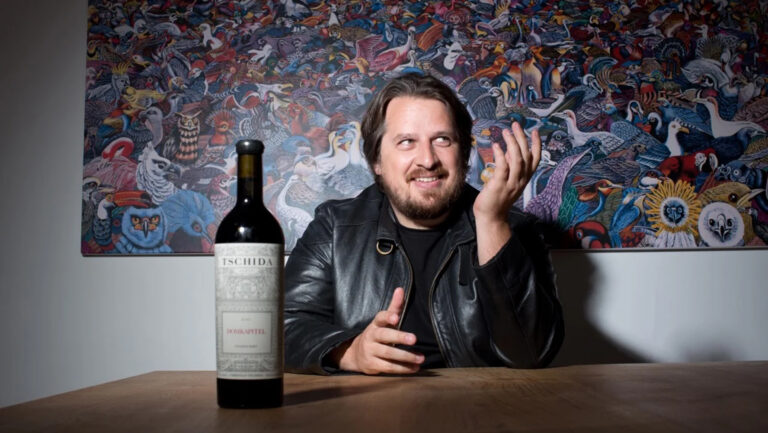
A year later, Feiring says Christian Tschida was “showing that natural wine could be profound and ageworthy.” Feiring also credits Burgenland’s relatively inexpensive vineyards, which “made it more possible for winemakers listening to what was going on in the natural wine revolution to jump on board.” The region’s proximity to Vienna and the city’s growing culture of natural wine bars supplied an appreciative market.
Room to Take Risks
Observers also note an openness and self-possession in Burgenland. “More than anyone else, Burgenland seems to be paying attention to the rest of the world in a lot of ways,” says John McCarroll, the European portfolio manager at Coeur Wine Co. in New York City. “Something about it feels further west than the rest of Austria, more connected to the world.”
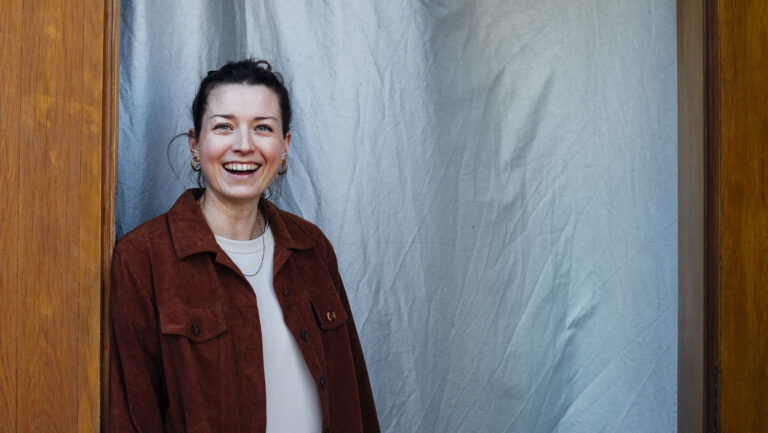
“Even France doesn’t have the amount of fuck-you confidence I think Burgenland does,” says McCarroll. That confidence, he argues, springs from new wealth and the risk-taking it affords, as well as the potential producers see. McCarroll points to growers like Stefanie Renner of Rennersistas (whom he represents) as “a synecdoche for Austrian wine as a whole. They’ve recently made a huge jump in quality, but I think there’s still more potential. You have wineries with access to really good fruit, internationally trained employees, and yet they are still kind of underground, which I think is a pretty good sign.”
Burgenland growers have also leaned into the mutual strength of producer groups, both to discover their individual styles and set themselves apart. Pannobile, the most recognized, is a working group of nine experimentally minded growers clustered around the biodynamic hub of Gols. Grower Hans Nittnaus founded the group 30 years ago as part of a collective search for identity and quality. It gradually grew into a circle of debate, criticism, experimentation, and encouragement that propelled members, including Beck, Preisinger, Heinrich, and Rennersistas, to international acclaim. “We criticize the wines, not just clap each other on the shoulders,” says Beck. “We think only by doing this we can move forward and improve our work and the quality of our wines.“
The array of resulting styles now feels definitional for Burgenland. Finessed, elegant single-vineyard Blaufränkisch, Pinot Blanc, and Chardonnay sit side by side with poppy pét-nats, carbonic Zweigelts, and juicy orange wines that play with the region’s abundance of aromatic varieties, like Muskat Ottonel.
The Message in the Moric Controversy
All this experimentation plays out in the context of Austria’s strict wine laws. After a wine adulteration scandal rocked Austria in 1985, the country implemented tight regulations in the name of consumer protection. Those standards compelled Austrian producers to reconsider everything, eventually pushing Austria toward its current position as a global leader in environmentally responsible viticulture and low-intervention wines.
But 40-plus years later, the old laws chafe. Tastes, styles, and ideas of typicity have evolved. Austria’s wine law lists 27 wine “flaws,” including volatile acidity and reduction, that disqualify a wine from listing its place of origin. Yet these characteristics have, to some degree, become hallmarks of a new Austrian style.
The more each side digs in, the more distinctive the wines get. “We see producers embracing a degree of reduction rather than polishing it away, making profound wines from Welschriesling, increasingly trusting indigenous grapes and traditional methods over international expectations,” says Stephan Schindler.
“We all would be very happy to put Burgenland on our label,” says Renner. “It’s where we’re from.” But she and her like-minded peers can only label their wines as “‘Wein aus Österreich” or ‘Weinland’”—two generic terms that convey almost nothing about a wine’s origins or quality. “Quality factors like only hand harvesting, spontaneous fermentation, and no fining, I want to be able to say this on the label, too,” says Renner.
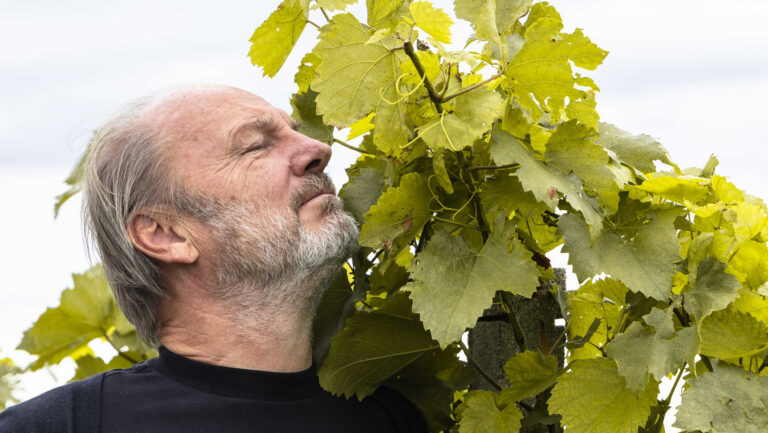
Roland Velich’s high-profile struggle with authorities brought these arguments to a head this spring. In September 2025, his wine, Moric Lutzmannsburg Alte Reben Blaufränkisch 2023, became the first Austrian red wine to score 100 points from James Suckling, which cited the wine as “setting a new benchmark for Blaufränkisch.” But Austria’s official tasting panel, Die Amtliche Kostkommission, rejected the wine for quality approval, citing a raft of faults.
The upshot was that Velich, Burgenland’s outspoken, acclaimed proponent of terroir wines, was barred from indicating anything about the wine’s terroir on its label: the name of the vineyard where his centenarian vines grow, the village of Lutzmannsburg, and Burgenland itself, which Velich has done much to put on the international fine wine map. Now one of Austria’s most celebrated wines goes out into the world under the nearly anonymous Alte Reben L (Old Vines L).
“The point is, I’m not allowed to write my place, Lutzmannsburg—a place we developed, a place we are trying to understand the core of,” says Velich. “Imagine if Romanée-Conti were not allowed to write La Tâche on the label. It would be a cultural disaster. We consider it the same way,” says Velich.
A New Vision of an Austrian Wine Region
The Velich controversy has put a fine point on a broader discussion about whether Austria’s appellation system fits its most ambitious wines. The debate comes as the country gears up to revise its national wine law in 2027. How Austria answers questions of typicity and origin will, at least in part, be in direct response to the challenges Burgenland has presented.
Amid all this, some growers think the whole concept of Burgenland requires a rethink. In 2024, Velich, Tschida, and grower Hannes Schuster founded a project called Reimagine Pannonia to explore this idea. “Pannonia is named for the old Roman province here,” Velich explains. “It’s a wine region, a cultural region of its own. We see that this kind of ancient culture of wine is one of the most complex, oldest, deep-structured cultural things we have, and we should really look carefully into who we are, what we are, where we come from, and where we want to go.”

Dispatch
Sign up for our award-winning newsletter
Don’t miss the latest drinks industry news and insights—delivered to your inbox every week.
Valerie Kathawala is a New York-based journalist specializing in the wines of Austria, Germany, South Tyrol, and Switzerland. She is also the co-founder and co-editor of TRINK Magazine. She holds a WSET 3 certification.