For both grape growers and wineries, acknowledging any slowdown in production can be difficult, especially at a time when shifting market demand is an unrelenting stressor. While it’s not easy to discuss, finding ways to slow production until there’s a market adjustment is a necessary choice right now for many producers to ensure long-term viability.
“For many of our clients, it’s not an option to bulldoze everything,” says Randy Heinzen, the president of Vineyard Professional Services in Paso Robles, California. “There’s sunk costs and emotional attachment. Their vineyards represent their wealth strategy and lifestyle and are a piece of who they are.”
Vineyard idling, interchangeably referred to as mothballing or resting, is when production is put on pause, usually for a few years. Rather than removing planted acres, idling allows viticulturists to save money “until production can proceed,” writes professors Michelle Moyer, Ph.D., and Markus Keller, Ph.D., at Washington State University, and Patricia Skinkis, Ph.D., at Oregon State University. A 2025 study of 19 northern Willamette Valley vineyards establishes that idling vineyards saved producers an average of 38 percent per acre on management costs, which includes canopy and floor management, pruning, leafing, and harvesting, with some sites halving their vineyard management costs upon idling.

Don’t miss the latest drinks industry news and insights. Sign up for our award-winning newsletters and get insider intel, resources, and trends delivered to your inbox every week.
Idling is well-suited when “people can’t just spend the normal amounts of money, but they’re hopeful there will be a return to production within a year to at most three years,” explains Dr. Skinkis.
Openly discussing the complex decision to idle vineyards can offer a sense of renewed solidarity among grape growers and winemakers. This is partly out of necessity. “You can’t rest a vineyard on one side of a fence line and not have it impact neighbors on the other side who will have to worry about disease or pest pressure,” says Heinzen. “But during a difficult time, neighbors can also share knowledge and feel that they are in this together.”
“We are really trying to normalize and destigmatize the decision to idle or even remove vineyards, because beyond wine and grapes, it’s not an atypical issue for producers of any agricultural crop,” says Skinkis. “There are ebbs and flows. It’s hard for many wine producers because, for more than 25 years, they could always find a home for their grapes—for some, that’s been the case for more than 40 years.”
Here, winemakers and vineyard managers share how they ultimately decide to idle vineyards rather than remove them. They also break down the horticultural and financial measures that support stability now—and a more sustainable wine industry in the years to come.
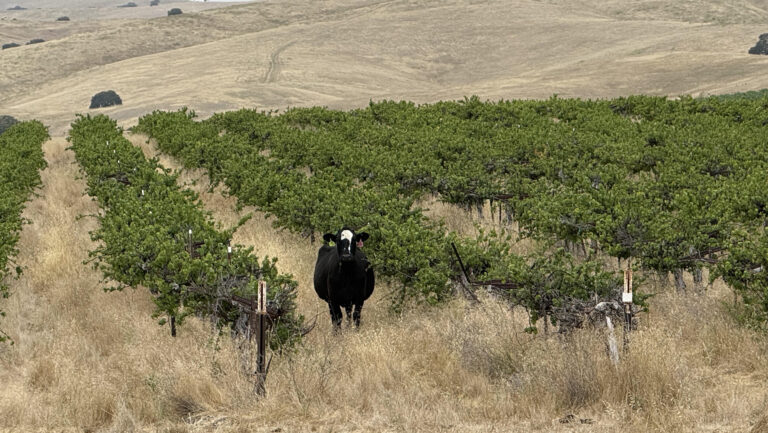
When Does Vineyard Idling Make Sense?
Skinkis notes that, in 2024, “Producers didn’t know when to call the shots, they just knew it wasn’t good.”
As more time passed and grape growers didn’t have homes for their fruit, and as estate vineyards and wineries evaluated cumulative sales, action steps became more urgent. There are a few options producers have, like removal of planted acreage, grafting to new varieties, replanting to different crops altogether, and idling. So, what factors inform the decision to idle vineyards?
When speaking with clients, Charlie Hamilton, the viticulture and operations manager for KG Vineyard Management in California’s Lodi Delta, first stresses the importance of looking beyond the current season. “If the client isn’t sure they’ll want a vineyard within the next five years, and given the amount of fixed capital cost in a vineyard and the fact that idling still necessitates some measure of expense, we may suggest removal,” says Hamilton.
Additionally, assessment of a vineyard’s current health and future potential “is the biggest driver,” observes James Ontiveros, a farmer and the proprietor of Ranchos de Ontiveros in Santa Barbara. “If a vineyard has a virus and won’t recover, those acres easily get pushed out. But if a younger vineyard is healthy, spending some money to prune and minimally irrigate it to keep it going makes sense. And, if a vineyard was never a strong producer, or if what it can produce is not in great demand, then the decision to remove it or replant to something else is easy.”
Similarly, Richard Hoff, the director of viticulture at Mercer Ranches in Prosser, Washington, looks to diversified farming for some plantings, while others, because of the grape variety and current demand, are well-suited for idling, as they will readily “come back into quality winegrape production within a year or two,” he explains. Of 3,350 growing acres, about 1,000 have been idle at various levels since 2025.
“People are taking this time to evaluate,” explains Dusty Timmons, the general and vineyard manager of Lost Draw Vineyards in the Texas High Plains. For Timmons, this means replacing Pinot Grigio with Picpoul Blanc, a Rhône white that’s showing great expression in Texas. Heinzen adds that idling vineyards offers a good amount of time for such assessments. “Top grafting has been a common practice in our industry as trends change; now it’s an important part of vineyard resting as you can wait two years to top graft, versus trying to get a crop for the next year,” explains Heinzen.
Once the decision is made to idle vineyard blocks, vines must be adequately prepared to survive and to produce high-quality grapes again in the near future.
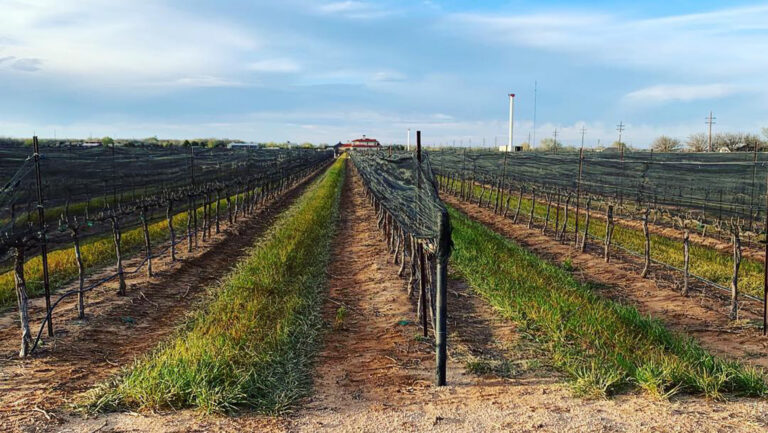
Maintaining Vine Health During Idling
Vines that aren’t prepared properly for idling can be harder to revitalize later. “If you take things too far, you can cause medium- or long-term damage from too much water stress,” says Hoff. “Though it’s interesting how little water you can give vines without stressing them—the key is keeping them on a steady drip all year and not watering very early in the season. We started in the middle of June, and then [irrigated] at about 33 percent of what is typical.”
Heinzen describes irrigation as non-negotiable. “Water is the number one input that, if you skimp on it for one year, can result in years of impact going forward,” he explains. He also emphasizes weed control as important, based on anecdotal experience, as it can take “two or three years of work to bring the vineyard back to stasis.”
“Next year’s crop is latent in buds, so if you completely step back from farming, you are inhibiting much fruit formation for next year’s crop,” explains Heinzen. “So, we say mothballing is a two-year process.”
Pruning more aggressively than usual is also vital. Moyer, Keller, and Skinkis note that “severe pruning” minimizes the need for canopy management, irrigation, and vine nutrient supplementation, while “light pruning” may entail “in-season expenses or challenges when returning the vineyard to production in the future.”
Other considerations include how much fertilizer, fungicide, and insecticide to apply. At first, Hoff held off on spraying fungicides, but as a few mildew flare-ups edged into actively farmed blocks (as can spider mite and leafhopper flare-ups), Hoff decided to uphold lighter spraying protocols on idled acreage this year. He also estimates that roughly two-thirds of the nitrogen that grapes rely on during a growing season is sourced from reserves within the soil; this means idled vineyards can become nitrogen deficient after more than a year, so some nutrient regimen is appropriate.
It is as yet unknown how many years a vineyard can be idled with these protocols, and how vines that have been idled for a period of years will fare later. “You can lose vineyards that go through a cycle of lack of real care,” says Timmons. “But when marketability is unclear, it’s a logical step to try.”
Calculating the Cost of an Idle Vineyard
Financial responsibilities, like operating loans, unpaid grape contracts, and tax obligations can influence the decision to idle vines or not, and for how long. Younger vineyards likely still carry “developmental loans,” explains Hamilton. Therefore, saving on vineyard management costs versus removal altogether is a calculus owners must work through.
“I’ve removed all romance from the vineyard,” says Timmons. “You must look at it from a pure spreadsheet calculation, being as analytical and disconnected as you can be.”
Lost Draw Vineyards was planted 20 years ago on land the Timmons family has owned since the 1950s. However, “You can’t look at a block and say, ‘Man, this is the first block I put in,’ says Timmons. “You look at what it’s yielding and the expenses, and you’ve got no choice.” He further explains that tonnage per acre, rather than price per acre, is a more accurate measure of a vineyard’s economic value.
Another issue is that if some grape growers slow production and others in close proximity within the same region do not, establishing a sense of demand and a premium price for grapes is even more challenging.
Ultimately, to invest in seasonal maintenance for idled vines, producers must realistically foresee that healthy, promising vineyard sites will return to production, see longevity, and meet a revived demand for key regional varieties.
Pathways to Survival and Sustainability
Securing accurate data on how many vineyard acres are planted, how much wine is collectively sitting in inventory, effective sales and marketing strategies, and how much contraction is needed, would help producers determine their paths forward and provide reassurance that the current downturn has an endpoint.
“There’s a lot of forecasting,” explains Skinkis. “We’ve got a global issue and we can’t define how we can move forward. That’s crippling the industry.”
Since those numbers are hard to pinpoint as the situation is unfolding in real time, Skinkis suggests wineries start internally “to grasp where the pinch point is.” She’s also currently connecting with grape growers to ask how much they want to save on vineyard management and what choices they’ve made that led to savings, gathering data that can be shared.
A bright spot has been that, as people closely scrutinize those patterns, they’ve recognized they don’t necessarily need to veer toward a minimized farming model; they need to meaningfully restructure their production. For some, blocks that have underperformed historically might be rewilded through conservation programs—for example, in Oregon as part of the Oregon Department of Fish & Wildlife. “There is optimism in focusing on efficiency,” says Skinkis.
Closely focusing production “to where the demand is right now,” says Hamilton, is another step toward sustainability. “We need to focus on what consumers want and develop to that. What drives my optimism right now is that the wine industry isn’t as commoditized as other crops. Every year has nuances and variability, and we still have a sense of place.”
“We are getting leaner and into better fighting shape,” says Heinzen. “Part of this is realigning vineyards into desirable assets. At the Unified Wine and Grape Symposium this coming January, we are sharing some of the benefits. For example, once mothballed, should vineyards rest a couple years to rebuild soil health, and give soils respite, where they aren’t constantly farmed, tilled, or fertilized? Environmentally, it’s a good idea to take breaks, and we see clients using this time as an opportunity.”
Both Timmons and Ontiveros have also seen some gradual improvements in the market since 2024, and are tentatively optimistic about a forthcoming market correction. “We’re three generations into building a real wine-consuming culture in this country,” says Ontiveros. “In a pretty dark hour, I keep thinking, this is good. We’ll get there.”

Dispatch
Sign up for our award-winning newsletter
Don’t miss the latest drinks industry news and insights—delivered to your inbox every week.
Amy Beth Wright is a creative nonfiction writer and journalist covering wine, food, and travel. In addition to SevenFifty Daily, she contributes to Wine Enthusiast, Decanter, and Imbibe, and publishes Wine Flights on Substack. She holds a Level 3 certification from the Wine & Spirit Education Trust (WSET). Keep in touch on Instagram @amyb1021 and visit amybethwrites.com to read more of her work.