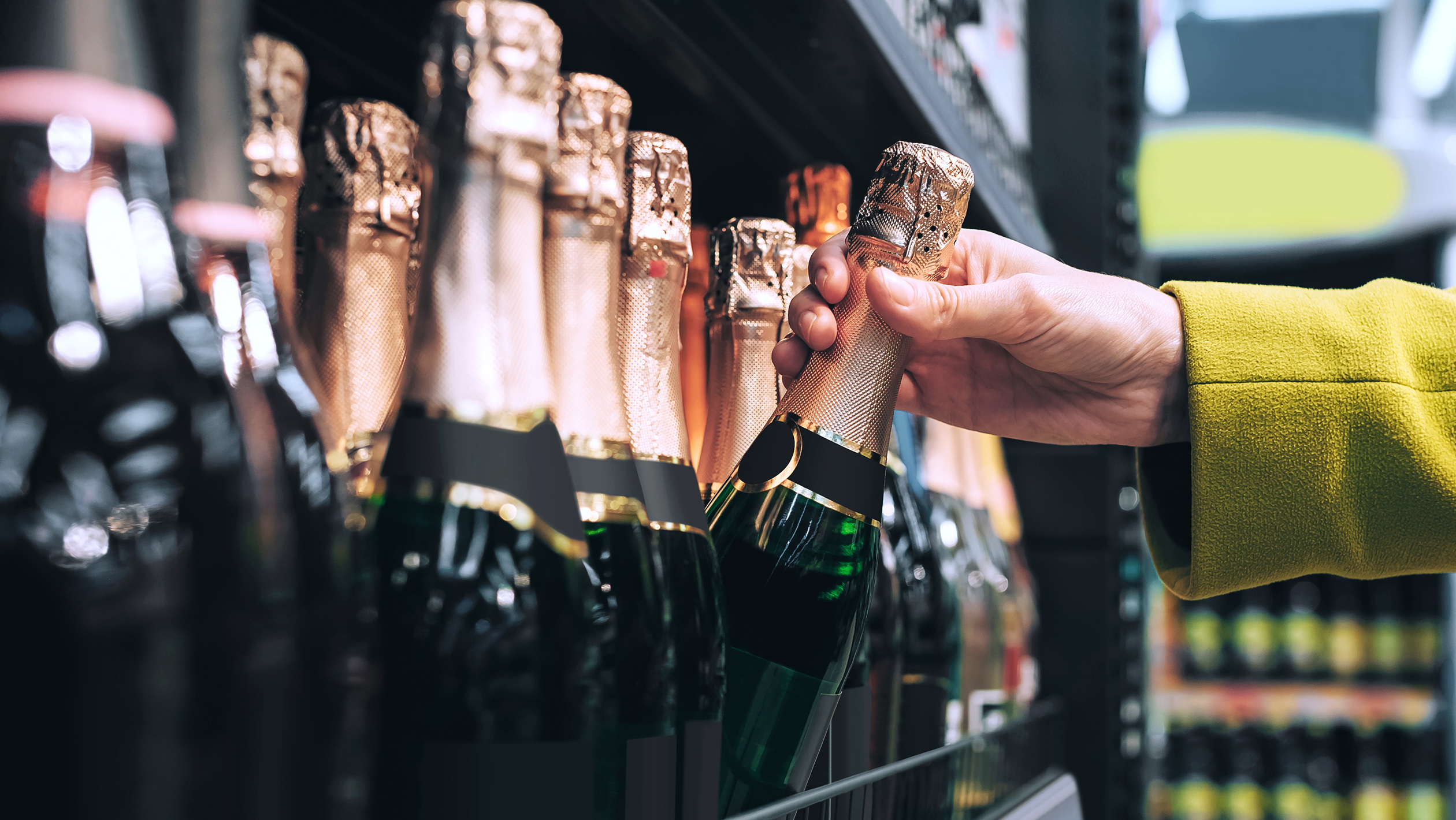
While Champagne is a year-round staple at many bars and restaurants, the celebratory nature of bubbles makes this classic French wine a perennial holiday favorite. To boost sales during the busy festive season, it’s important to be well stocked with the most in-demand producers and categories. Increasingly, that category is the driest style available: non-dosage Champagne.
Once a niche offering, more and more Champagne producers are exploring lower dosages. To legally be considered a non-dosage (or brut nature or brut zero) Champagne, the wine must have less than three grams per liter of residual sugar. While higher levels of sugar were once needed to balance the very high acid levels found in grapes from cool-climate Champagne, that’s not always the case these days. As temperatures rise and winemaking becomes ever more fine-tuned, many Champagnes simply don’t need the extra sugar to reach the perfect balance.
With so many interesting non-dosage options now available, SevenFifty Daily asked on-premise Champagne-focused wine buyers from around the country for their top picks in the category. Their selections highlight the exciting diversity and quality of this increasingly popular Champagne style. (All wines are listed with suggested retail price per bottle.)
Don’t miss the latest drinks industry news and insights. Sign up for our award-winning newsletters and get insider intel, resources, and trends delivered to your inbox every week.

Guy Larmandier Cramant Grand Cru Blanc de Blancs Brut Zéro NV; $60
Selected by Adele Corrigan Wade, general manager, 13 Celsius, Houston
Houston’s 13 Celsius is touted as a “haven for curious drinkers,” thanks to their focus on unique wines and various serving sizes from large-format bottles to tasting portions. General manager Adele Corrigan Wade has been leading the charge for almost two decades, and has compiled a deep and thoughtfully curated sparkling selection that includes several brut nature Champagnes. Her current favorite is Guy Larmandier’s Cramant Grand Cru Blanc de Blancs Brut Zero.
“This Champagne just sings to me,” says Corrigan Wade. “This is one of the long-standing niche producers from the ever-impressive Rosenthal portfolio. This is 100 percent Chardonnay from the Grand Cru of Cramant. With all fruit grown on limestone soils and no dosage, the incredible minerality shines through. It’s aged on the lees for three years, which adds just that perfect amount of yeasty texture to balance the acidity.”
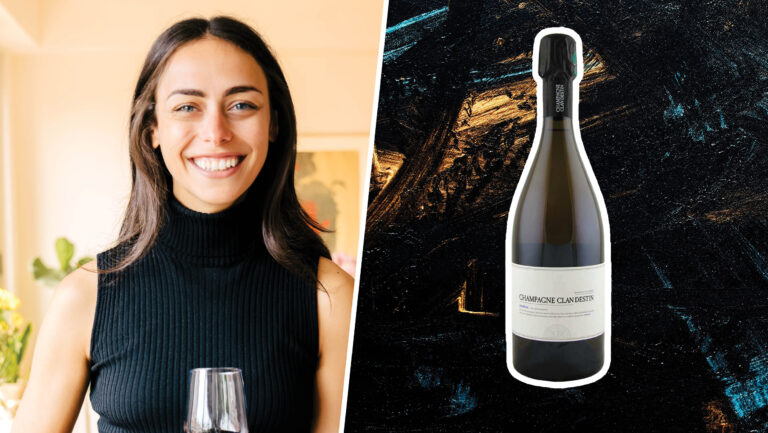
Champagne Clandestin ‘Boreal’ Blanc de Noirs Brut Nature NV; $85
Selected by Isabel Kardon Neuhaus, sommelier, The Modern, New York City
Sommelier Isabel Kardon Neuhaus has been guiding guests through The Modern’s extensive wine list for four years. The two-Michelin-starred restaurant in New York City is known for its robust, wide-ranging list, which includes a generous selection of Champagne, from stalwart Grandes Marques to up-and-coming producers doing things differently, like Champagne Clandestin.
“Unlike most beloved Champagnes, Clandestin has not been in a family for generations on an especially sacred plot of land,” says Neuhaus. “Instead, winemaker Benoît Doussot is doing things his own way—championing bio-certified, progressive growers with serious untapped potential across Champagne and exploring vinification based on specific soil types and expositions. The Boreal cuvée is 100 percent Pinot Noir from north-facing slopes in the Côte des Bar. It embodies everything I want with a blanc de noirs: tension, fruit, texture, and balance.”
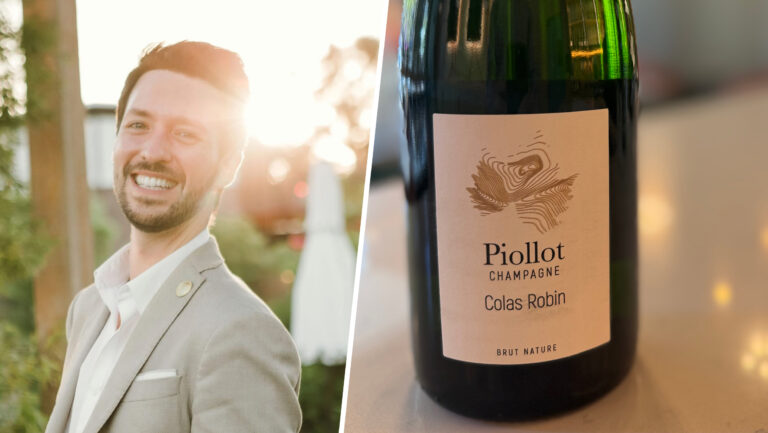
Champagne Piollot ‘Colas Robin’ Brut Nature 2018; $100
Selected by Raymond James Irwin, chief champagne officer, Fizz Champagne Bars + Wine Club, multiple locations, California
With the enviable job title of chief Champagne officer, Raymond James Irwin, of Fizz Champagne Bars and Wine Club in California, surely knows his bubbles. The well-curated Champagne list offers a mix of new and familiar names, but Irwin calls attention to the small, family-owned producer Champagne Piollot, which he recently featured in the Fizz wine club.
“I love this because it’s rare to have a 100 percent Pinot Blanc Champagne, let alone one that’s also brut nature and biodynamic,” says Irwin. “This is a small grower-producer from the southernmost part of Champagne. It’s from one of the best years in the last 50—2018—and it’s aged for more than five years and from a single village. If you want top-tier, unique, but just delicious brut nature Champagne with the zing, zip, and balance, this is the Champagne.”
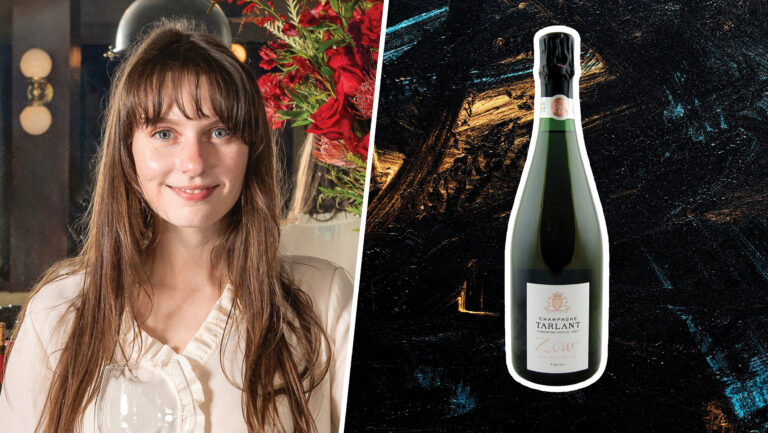
Tarlant Zero Rosé NV; $75
Selected by Mary Martin, general manager and sommelier, Tasting House, Los Gatos, California
Tasting House, a wine bistro and Champagne bar in Los Gatos, California, has a wine list that includes over 100 Champagnes, which can be served alongside a full tasting menu or simply with some caviar. When recommending Champagnes to guests, general manager Mary Martin gravitates towards grower-producers that compliment the globally inspired menu.
“One of our favorite brut nature Champagnes that fits both of these criteria is the multi-vintage Tarlant Zero Rosé,” says Martin. “For having zero dosage, it has a lovely weight and texture to it, which allows for a nice range of pairing options from appetizers to entrées and even dessert. The grapes are hand-harvested from 63 different parcels across four villages near Oeuilly. Twelfth-generation winemaker Benoît Tarlant has a hands-off approach to winemaking, using indigenous yeasts and no filtering, allowing the terroir to express itself quite beautifully in the glass.”
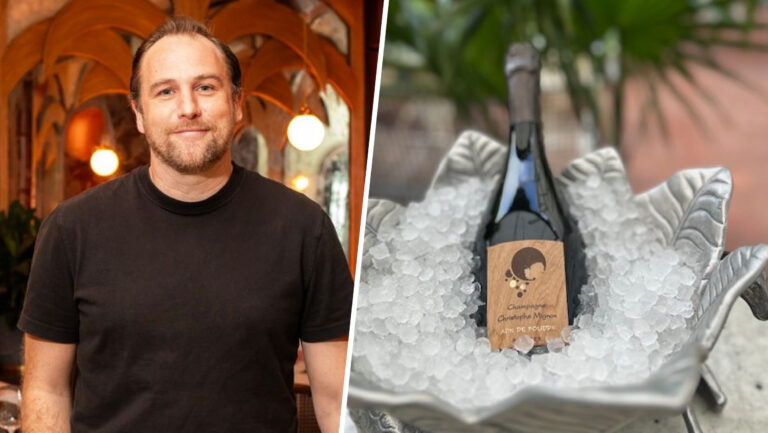
Christophe Mignon ‘ADN de Foudre’ Meunier NV; $90
Selected by Sean Dickinson, beverage manager, Sunny’s, Miami
Since the pandemic-era pop-up reopened in a permanent space in 2024, Sunny’s has been one of Miami’s most talked about steakhouses. While the food is a big part of the draw, the restaurant is equally well known for its beverage program, which features fancy cocktails, plenty of big reds—and a brut nature Champagne from Christophe Mignon, which beverage manager Sean Dickinson even recommends alongside a filet.
“Don’t let the Comic Sans on the label fool you: this is serious wine,” says Dickinson. “Mignon is notoriously scrupulous in the vineyard, employing one person per hectare to oversee stringent biodynamic practices. This rare amount of attention produces fruit with optimal ripeness and nothing to hide. A specialist in [Pinot] Meunier, Mignon’s brut nature is laced with aromatics of red fruit and chock-full of minerality and acid. It is a perfect food wine and can pair with even the sturdiest of proteins. Mignon and filet mignon, anyone?”
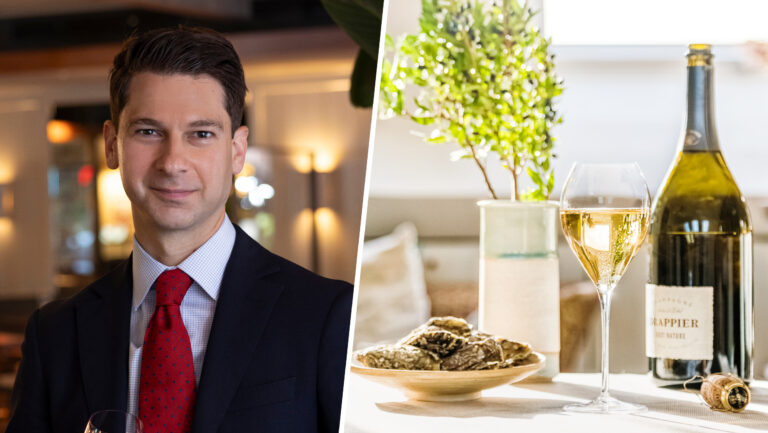
Drappier Brut Nature NV; $60
Selected by Evan White, wine director, Bludorn Hospitality Group, Houston
At the modern American restaurant Bludorn in Houston, wine director Evan White also leans toward food-friendly Champagnes that can stand up to the richer dishes on the menu, which can range from short rib ravioli to dry-aged duck. His top pick is currently Drappier’s brut nature.
“It’s a blanc de noirs made from 100 percent Pinot Noir, coming from the Côte des Bar, the southernmost subregion of Champagne,” says White. “The wine is savory and salty, incredibly brisk and refreshing, but with some real body and substance to it. Even though it’s brut nature, it’s not a light wine and is a wonderful Champagne with food. This retails for around $60, which, for a wine of this quality, is an incredible steal.”
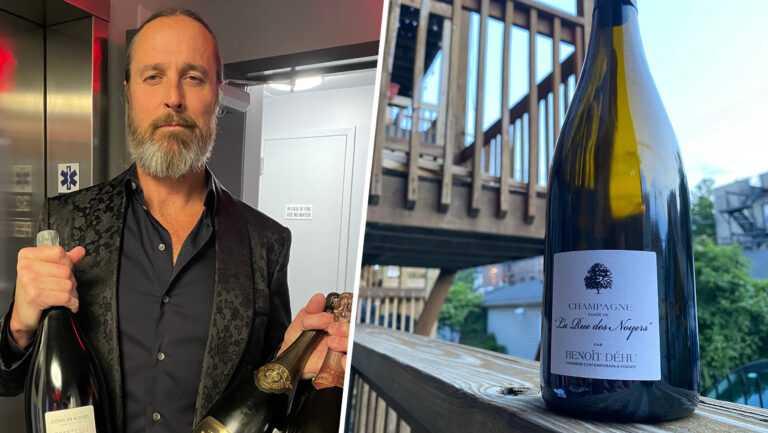
Benoît Déhu ‘La Rue Des Noyers’ Brut Nature NV; $125
Selected by Michael Seward, wine director, Pop’s For Champagne, Chicago
With the vast majority of their menu dedicated to the category, Chicago-based Pops for Champagne is no stranger to recommending great Champagnes. Their educational menu spans nearly all styles, with helpful explainers on bottle sizes, regions, and sugar levels. As the longtime buyer for Pops, wine director Michael Seward has developed a few favorites, like Benoît Déhu’s La Rue Des Noyers Brut Nature, which is 100 percent Pinot Meunier from the village of Fossoy.
“I am incredibly fond of the wines from Benoît and find his interpretation of [Pinot] Meunier, especially in La Rue Des Noyers, driven and electrifying,” says Seward. “It’s a great example of how terrific [Pinot] Meunier can be on its own, and his dedication to farming really shows through on the end product with a fruity, terroir-driven, soulful wine.”
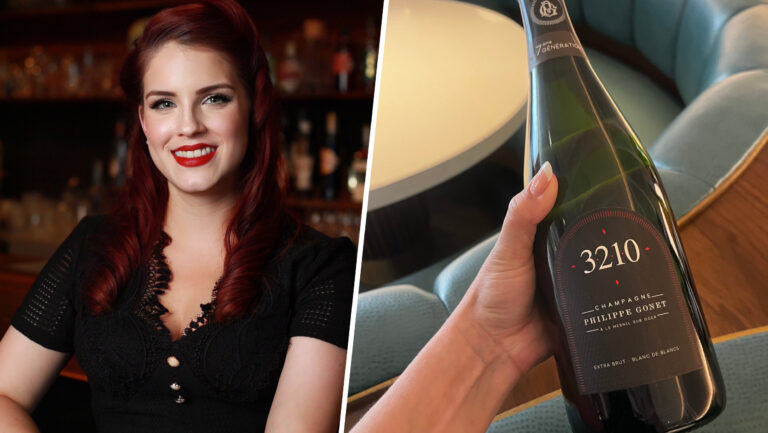
Philippe Gonet ‘3210’ Blanc de Blancs Extra Brut NV; $95
Selected by Madeleine Thompson, beverage director, Coupes, Dallas
The Dallas-based Champagne bar, Coupes, dedicates no less than 10 pages of its wine list to Champagne, and is recognized as one of the top destinations for enjoying Champagne stateside. Therefore, beverage director Madeleine Thompson has a full list of non-dosage Champagne ready to recommend, including the 3210 Grand Cru Extra Brut from Philippe Gonet. While technically labeled as extra brut, the wine has zero grams of sugar and therefore qualifies as brut nature (Champagne labeled extra brut can have between zero and six grams of sugar per liter).
“This Grand Cru expression of Chardonnay has been aged three years, from two terroirs, one variety, and zero dosage,” says Thompson. “The ripeness of the fruit results in a balanced and bright cuvée with notes of lime blossom, lemon tartlet, and stone fruit.”

Dispatch
Sign up for our award-winning newsletter
Don’t miss the latest drinks industry news and insights—delivered to your inbox every week.
Caitlin A. Miller is a New York-based wine writer and a senior editor for SevenFifty Daily. Her work has appeared in Food & Wine, Vinous, and Christie’s International Real Estate Magazine. She holds the WSET Diploma in Wines, the WSET Level 2 Award in Spirits, and was the recipient of the 2020 Vinous Young Wine Writer Fellowship.