As the wine industry looks for opportunities to spark sales amidst declining wine consumption, many point out the success of a specific category: sparkling wine. The category maintained a compound annual growth rate (CAGR) of six percent between 2017 and 2022, even as wine as a whole experienced a one percent decrease in CAGR during the same time period, according to IWSR.
That’s not to say that sparkling wine hasn’t experienced some dips in recent years; though the sparkling wine market was valued at about $290.1 billion in 2024, Champagne exports were down 9.2 percent in 2024, and according to the International Organization of Vine and Wine’s “State of the World Vine and Wine Sector in 2024” report, sparkling wine dropped 3.7 percent in terms of trade value and 0.3 percent in terms of trade volume in 2024.
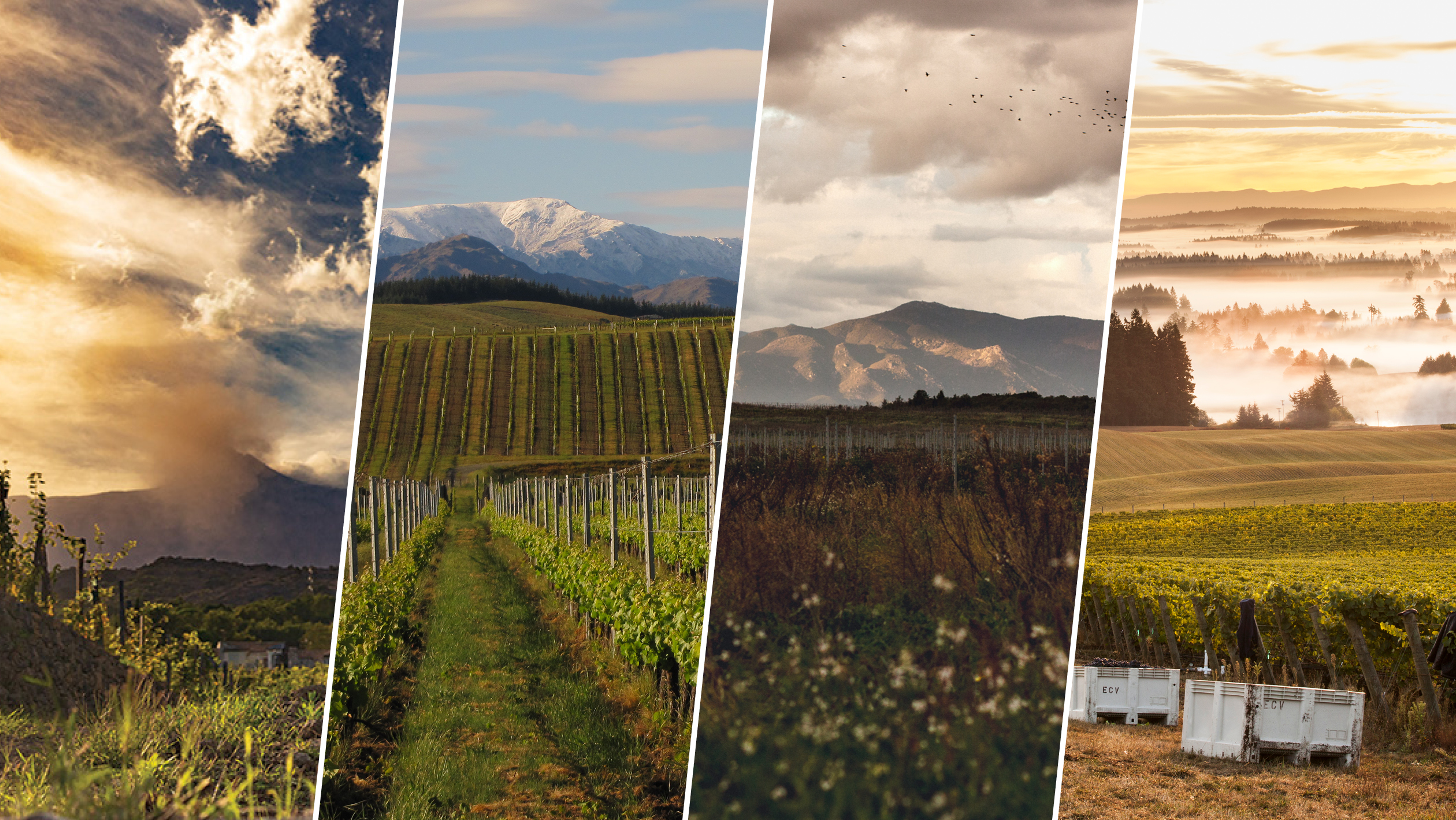
Nevertheless, going into the important holiday season, when about 20 percent of all sparkling wine is consumed, according to IWSR, bubbly remains an important sales driver—and it’s worth looking to less common sparkling wine regions for inspiration. While they vary in size, recognition, and sparkling wine production history, these four regions are making waves in the U.S. for different reasons—and their sparkling wine cultures are ones to pay attention to in the year ahead.

Don’t miss the latest drinks industry news and insights. Sign up for our award-winning newsletters and get insider intel, resources, and trends delivered to your inbox every week.

Etna: Attention Turns to Sparkling
Sparkling wine production in Etna isn’t new, says Antonio Benanti, the co-owner of Benanti Winery; it dates back to 1989, when Cantine Murgo began experimenting with bubbly expressions of Nerello Mascalese. But it wasn’t legally allowed to be labeled as Etna DOC until 2011, when Spumante and Spumante Rosato were added to the DOC. According to DOC regulations, the wines must be made from a minimum of 80 percent Nerello Mascalese using the metodo classico.
While sparkling wine comprises a tiny proportion of the more than five million bottles of Etna DOC wine produced each year, production is growing. According to data from the Spumanti dell’Etna association, production of Etna Spumante Bianco has more than doubled between 2019 and 2024 (from about 87,000 bottles to 199,000 bottles). Etna Spumante Rosato is smaller but also increasing; over the same time period, production has increased from 34,500 to 65,000 bottles.
Those numbers don’t account for sparkling wines made by Etna producers that fall outside the DOC, such as Benanti Winery’s Noblesse cuvée; because it’s entirely made with Carricante, it is labeled as Terre Siciliane IGT. “Our production has grown from just a few hundred bottles of Noblesse to about 4,000 bottles today,” says Benanti.
Buyers and producers alike attribute the growth in Etna’s sparkling wines to the confluence of two popular categories: Etna itself, and sparkling wine as a whole. “We believe that sparkling wines from the region are gaining popularity now because Etna wines in general have become among some of the most appreciated and respected wines in the Old World,” says Benanti. Fabrizio Germano, the general manager of Millesima in New York City, says that the region’s volcanic, mineral-rich soils make Etna a natural fit for sparkling wine. “Their bubbles are generally fine and persistent, and the palates are dry, fresh, long, and creamy,” he says.
New Zealand: Exports on the Rise
While most eyes in Marlborough locked on Sauvignon Blanc in the 1970s and ’80s, which would soon propel New Zealand into the international spotlight, Champagne native Daniel Lebrun saw something different when he first encountered this land. After planting Chardonnay, Pinot Noir, and Pinot Meunier, Lebrun launched his first traditional-method sparkling wine in 1985, thus kicking off New Zealand’s sparkling wine culture.
Wineries across both islands make high-quality, traditional-method sparkling wine today, but most of it is consumed within New Zealand, leading these sparklers to remain under the radar among American buyers. That’s changing, however. According to the 2025 New Zealand Winegrowers Annual Report, published in September, there’s been an uptick in sparkling wine exports since 2021. In 2024, 2.3 million liters of New Zealand sparkling wine were exported, versus an average of 1.2 million liters exported between 2016 and 2020. Ranit Librach, the U.S. market manager for New Zealand Winegrowers, credits the wines’ “exceptional value for the quality” as one of the likely reasons for their growing attention abroad.
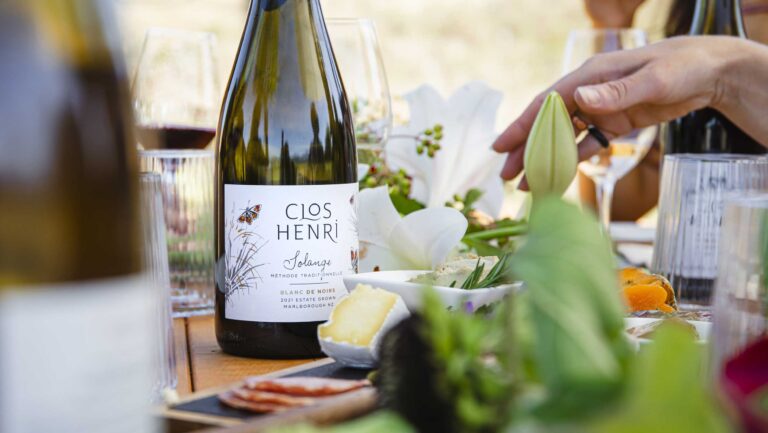
The trend has been similar at Marlborough wine estate Clos Henri, which first made 120 cases of traditional-method Blanc de Noirs in 2014. Most of the production either remained in New Zealand or was sent to Scandinavian countries until 2022, when winemaker Damien Yvon increased production to 700 cases, allowing some of the wine to go to the U.S. “We are confident this market could grow, as consumers will discover and appreciate the lively profile of our Blanc de Noirs,” says Yvon, crediting the region’s fertile soils and diurnal temperature shifts as the backbone to the wine’s freshness and fruit expression.
Still, sparkling wine makes up a tiny fraction of the New Zealand wines that land in the U.S. In the 12 months leading up to June 2025, just 147,000 liters of New Zealand sparkling wine were exported to the U.S.—more than any other market except Australia, but just 0.14 percent of the country’s total exports to the U.S.

Corsica: Creating a Sparkling Wine Culture from Scratch
Corsica doesn’t have a culture of sparkling winemaking—in fact, AOC and IGP rules on the island don’t allow for sparkling wines—but one producer wants to change that.
“Corsica has all of the elements—diversity and relevance of terroirs, strong sense of place, culture, and soul—and yet no precedent in sparkling wine,” says Richard Geoffroy, the founder of IWA Sake and the former chef de cave for Dom Pérignon, describing the opportunity as a rare and exciting blank page. Together with his son Charles Geoffroy and former Corsican marketing ambassador Vincent Cervoni, Richard Geoffroy launched Avvizzà with the 2023 vintage, aiming to showcase the island’s potential for high-quality, dry sparkling wines.
Corsica’s few sparkling wines have primarily been made from Muscat and vinified into sweet or semi-sweet bottlings, according to Charles Geoffroy; some other neighboring wineries, including Jean-Charles Abbatucci, have experimented with traditional sparkling wine production. Avvizzà is the first to dedicate itself to Corsican bubbly, bottling its wines as Vin de France. Using an extended Charmat method, the flagship wine is made using Sciaccarellu, Biancu Gentile, and Vermentinu.
The Geoffroys hope that this is the beginning of a bright future for Corsican sparkling wine, particularly as more wineries look to diversify beyond the plateauing rosé segment. “For a long time, there was little incentive for Corsican producers to explore sparkling wine,” says Charles Geoffroy. Sparkling wine, one of the few growing wine segments, offers a natural path forward. “Beyond its natural suitability, Corsica has the open mindset needed to unlock such potential,” says Richard Geoffroy. “Corsica should be able to build quick momentum, and soon become one of the most interesting new voices in the world of sparkling wines.”
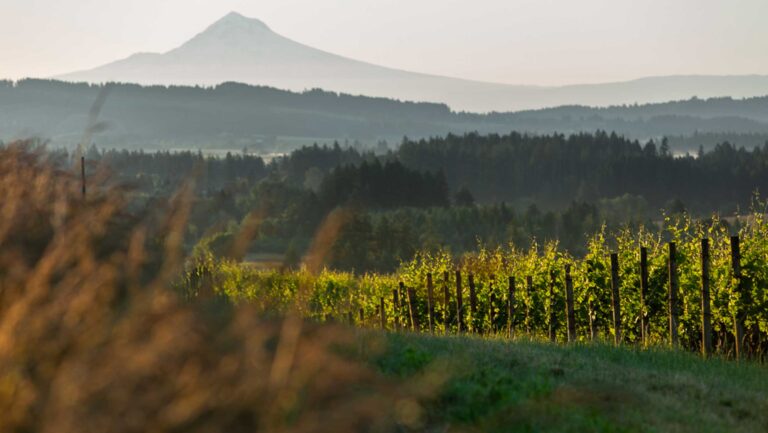
and Elk Cove. Photo courtesy of Elk Cove Vineyards.
Willamette Valley: More Access for Smaller Producers
“Sparkling was still a relatively small part of the Willamette Valley’s overall portfolio until around a decade ago,” says James Frey, the winemaker and founder of Trisaetum Winery. But more recently, that has changed. The Willamette Valley Wineries Association reports that 108 of its producers make sparkling wine today, compared to under two dozen in 2018.
Just a handful of regional producers were making sparkling wines in the early 2000s, says Kate Payne Brown, the head winemaker at Argyle Winery. “Argyle was by far the dominant player in volume, producing about 20,000 cases, which represented a strong majority of the total regional production,” she says. They now make around 40,000 cases annually. Early trailblazers like Argyle, Elk Cove, and Domaine Meriwether leaned into the Willamette Valley’s cool climate and specialization in classic sparkling-wine grapes Pinot Noir and Chardonnay.
But this momentum has led sparkling wine experts to create new companies that facilitate production for a wider range of producers; earlier this year, custom crush winery Vinovate acquired The Radiant Wine Company, a sparkling wine specialist that brought mobile tirage, disgorgement, and bottling services to producers. “We now have the infrastructure and technical expertise that allows even small producers to craft high-quality sparkling wines, and consumers’ palates have evolved,” says Payne Brown. “In many ways, we’re now seeing the rewards of years of belief and persistence; the faith that sparkling wine could truly thrive in the Willamette Valley is finally being realized.”

Dispatch
Sign up for our award-winning newsletter
Don’t miss the latest drinks industry news and insights—delivered to your inbox every week.
Vicki Denig is a wine, spirits, and travel journalist based between New York and Paris. Her work regularly appears in Decanter, WineSearcher, Food & Wine, and more. She also works as a content creator / social media manager for a list of prestigious clients, including Paris Wine Company, High Road Wine & Spirits, Becky Wasserman & Co, and more.