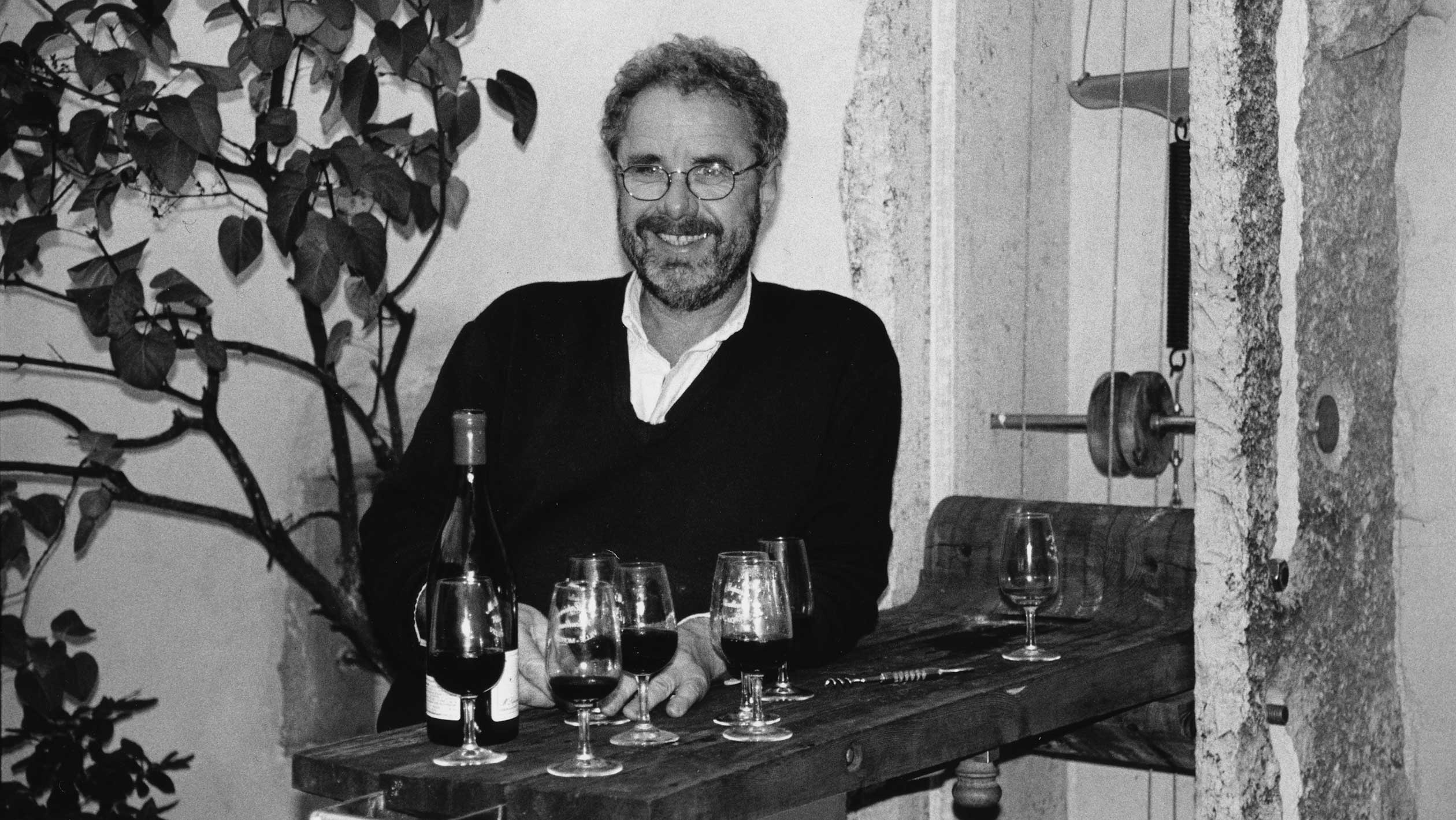
It’s impossible to discuss serious Beaujolais wines without mentioning the late Marcel Lapierre. Often linked with his colleagues in the region’s infamous “Gang of Four”—Jean Foillard, Guy Breton, Jean-Paul Thévenet, and himself, the four local winemakers who followed the guidance of Jules Chauvet and eschewed chemical-driven farming and vinification—Marcel Lapierre is an icon in his own right, known for pioneering and championing traditional Beaujolais and clean natural wine.
While commonplace now, natural winemaking was typically deemed radical at the time, particularly within the formulaic, mass-market sensibilities of Beaujolais in the 1980s. But Marcel Lapierre was ready to go to bat for his beliefs, and soon became a spokesperson for the movement that the “Gang of Four” stood for.
Today, Domaine Lapierre’s wines are staples for lovers of highly drinkable yet nuanced Beaujolais, and his influence is felt among winemakers close to home—especially his own children—and around the world.

Don’t miss the latest drinks industry news and insights. Sign up for our award-winning newsletters and get insider intel, resources, and trends delivered to your inbox every week.
Returning to Traditional Beaujolais
Born in 1950, Marcel Lapierre took over his family’s estate in Villié-Morgon at the age of 23; eight years later, he began studying under the tutelage of Chauvet, a local négociant now dubbed the “godfather of natural wine.” At the time, Beaujolais was experiencing an economic boom through sales of Beaujolais Nouveau.
“It was easy money,” says David Chapel, the cofounder and winemaker of Domaine Chapel, which is based in Régnié. Chapel, whose father, the esteemed chef Alain Chapel, was good friends with both Marcel Lapierre and Chauvet, describes the period as an era of herbicide, which was used to reduce vine competition and allow growers to farm more plants in shorter periods of time, so as to keep up with demand. “These fungicides wiped out any vine maladies that could reduce yield and synthetic fertilizers to maintain or boost the quantity of grapes,” he says.
In the cellar, wines were essentially made according to a standardized recipe, killing off indigenous yeasts and adding lots of sulfur to maintain consistency. “Beaujolais succeeded at maximum output, but in turn, the reputation of the region suffered,” says Chapel.
That was true in export markets as well, where large négociant houses dominated. “These wines had a reputation for being cheap and produced in mass quantities,” says Anthony Lynch, the sourcing and content manager of Kermit Lynch Wine Merchant (KLWM). His father, Kermit Lynch, deemed them as “having no taste of Beaujolais or Gamay.”
However, Beaujolais historically—and currently—was a land of paysans, says Chapel, and Domaine Lapierre helped to revive that spirit. “The estate was unique in that they began selling their own wines early on, and were always organic, as well as resisting the easy use of chemicals that was prevalent after the war,” he says.
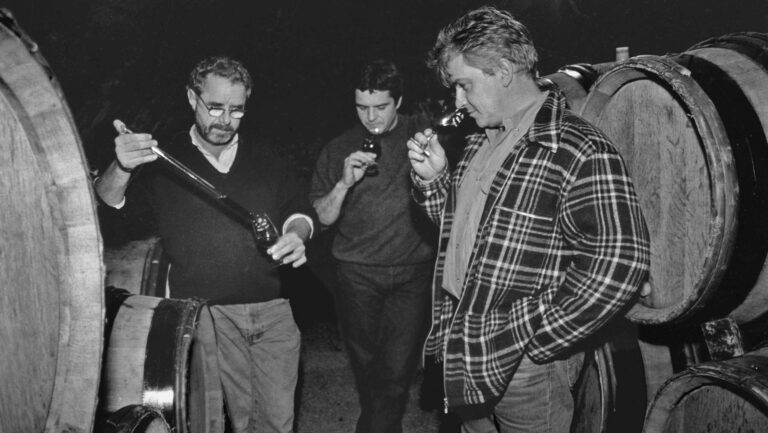
While Marcel Lapierre and his “Gang of Four” cohorts are considered leaders of the natural wine movement, it wasn’t their intention to introduce an avant-garde winemaking style. Mathieu Lapierre, who joined his father at the estate in 2004, just six years before Marcel Lapierre’s passing, describes the term as slightly problematic, as it didn’t completely describe their work.
“In his time, the notion of natural wine didn’t really exist—it was more of a word invented by several Beaujolais winemakers, including Marcel, to describe their work,” he says. “His style was intended to be closer to an older tradition of making wines in Beaujolais.” Rather, Marcel Lapierre’s approach was a reproach to the rising trends in commercial enology—including the use of yeast 71B, which gave wines from Beaujolais a distinct banana flavor.
“All these new methods were changing the typicity of Beaujolais wines, and [the Gang’s] goal was to rediscover the typicity they knew from the wines of their parents and grandparents,” says Mathieu Lapierre.
Above all, Marcel Lapierre’s style always emphasized cleanliness and lack of faults. He systematically used microscopes to follow live fermentations, which he developed in conjunction with likeminded winemakers to make informed vinification decisions. “This allowed them to have greater control over the quality of wines produced—it was very much a school of clean wine, not just simply letting nature take its course,” says Mathieu Lapierre.
Making a Mark Abroad
Marcel Lapierre wasn’t the only French vigneron to work this way; others around the country were farming organically and resisting chemical inputs, but he was one of the most vocal about it. “Marcel was often in Paris knocking on doors and introducing people to his ideas, many of whom were reluctant to the work of the domaine,” says Chapel.
Kermit Lynch—the domaine’s first and only American importer, who also gave the Gang of Four their collective moniker—first met Marcel Lapierre in 1990 and was immediately captivated by the soulful nature of his wines, as well as their minimal use of additives. He immediately purchased Lapierre’s 1989 vintage, and by 1991, the wines were officially introduced to the U.S. market—though, as with most revolutionary bottles, Domaine Lapierre’s wines weren’t immediately well received.
“My dad tells me that at the start, they were mostly hand sells in our retail store,” says Anthony Lynch. Marcel Lapierre’s Morgon—arguably his best-known cuvée—first appeared in the Kermit Lynch Wine Merchant newsletter in February 1991, with the 1989 vintage offer reading, “One of my most exciting new wines in recent years, the purity and expressiveness remind me of the Hubert de Montille Volnays that I imported during the seventies. It transcends the genre.”
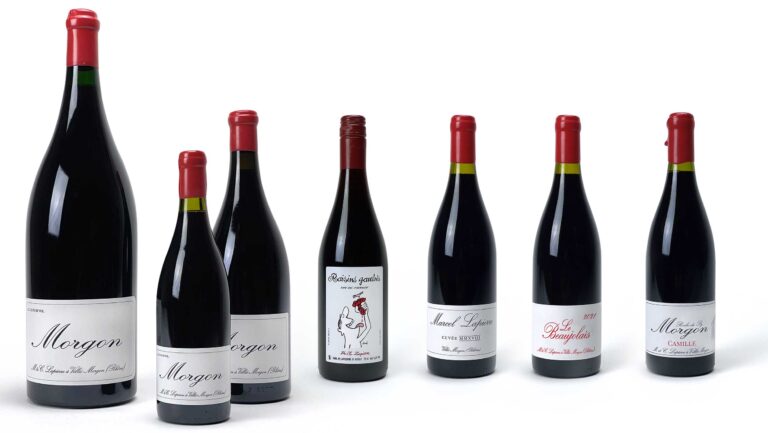
Success didn’t happen overnight, according to Graeme Blackmore, the vice president of sales for KLWM, who has been with the company since 1991. But the team was able to find many willing buyers who were curious to explore the Lapierre wines. “First, we were in the stores telling the story to everyone we saw, but slowly it moved into the restaurant world—remember that the sommelier boom had not taken hold quite yet, so it was a slow process of education, persistence, and trust,” he says. “But tasting was believing, and once it took hold, it became a cult of its own.”
Old records indicate that original supporters of Marcel Lapierre’s wines in California include Chez Panisse, Bouchon, San Francisco Wine Trading Co., and Paul Marcus Wines. “Some clients found the wines went through funky phases in the early years, but Marcel and the Gang of Four were constantly experimenting and honing their methods in order to consistently bottle clean wines,” says Lynch. Price point initially posed a challenge, as the wines cost more than typical mass-market Beaujolais at the time (the price listed in KLWM’s 1991 newsletter was $13.95 per bottle), but the story captivated many clients. Slowly but surely, the domaine developed a following.
Becoming a Reference Point for Beaujolais
At the same time, Marcel Lapierre simultaneously worked to convince friends and family members of his methods, as he knew he couldn’t forge the path against chemical farming and winemaking alone—and the proof was in the bottles.
Mathieu Lapierre credits his father as one of the first Beaujolais winemakers to make wine without sulfur—a style which was groundbreaking at the time, adds New York City-based wine consultant and educator Raj Vaidya. “He was totally ahead of the curve,” says Vaidya, stating that Marcel Lapierre was also one of the first to prove that low- to no-sulfur wines can withstand the test of time.
In meshing low-intervention with meticulous care, Lynch credits Marcel Lapierre with doing an exceptional job of tempering the extremes that are inevitably associated with natural wine. “Marcel started making natural wines not out of dogma, but because he wanted to make what he liked to drink—delicious wines without off-flavors,” he says.
Vaidya also notes that Marcel Lapierre’s work showcased that organic farming could be done on a larger scale, not just in miniscule plots. Because of this, his influence is still greatly visible in the region, says Mathieu Lapierre, as many young winemakers have been influenced by his passion for organic farming and low-intervention winemaking.
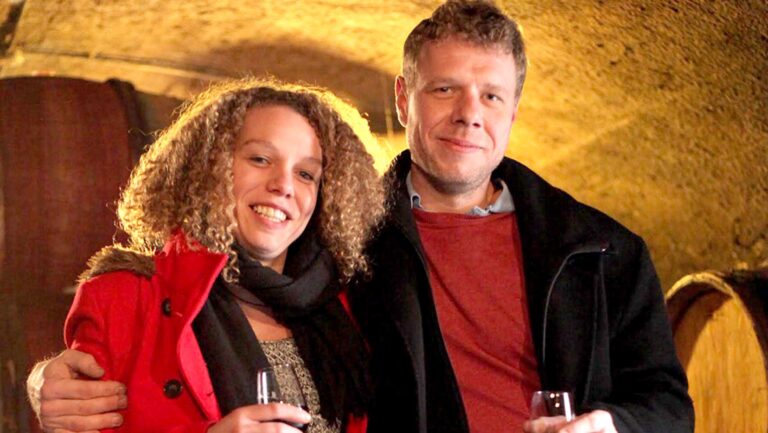
“What Marcel was doing was radical,” Chapel says, noting that the risks he took ultimately changed the status quo. “His ideas, his philosophy, his rejection of what had become the norm pissed a lot of people off—it still does—but the more important fact is that he left a legacy because those same ideas resonated with so many others.” With every year that passes, Chapel notices more land being converted to organic farming; according to the trade organization Inter-Beaujolais, by early 2024, more than 300 of the region’s estates were either managed organically or in the process of conversion.
However, Mathieu Lapierre affirms that his father’s legacy can be felt far beyond Beaujolais, much in part due to his willingness to share ideas. “Marcel took on many interns and mentees throughout his career, so there are many practicing winemakers today who did their apprenticeships or who worked at the estate,” he says.
Lynch agrees. “From what I’ve seen, the success of Lapierre’s wines inspired a whole generation of growers in Beaujolais and beyond,” he says, citing an increase in domaine-bottled wines, as well as a shift towards high-quality wines.
Today, top cru Beaujolais is often compared to Burgundy for its elegance, bright fruit, and aging potential, which was unthinkable at one point—and Marcel Lapierre’s wines are a big reason why. “Natural has become synonymous to many for funky or flawed; Lapierre’s wines have a purity of fruit and seductive texture that is just irresistible, and because of that they appeal to anyone and everyone,” says Mathieu Lapierre.
And of course, Marcel Lapierre’s legacy is felt through the work of his children: Mathieu, Camille, and Anne, who manage Domaine Lapierre today. “The domaine continues to exercise a deep knowledge of microbiology and fermentation dynamics … to make wines that reflect their terroir via the methods Marcel pioneered,” says Lynch.
Domaine Lapierre’s wines—both those made by Marcel himself, and those made by his children—remain reference points to young producers and consumers alike. “These wines are a reflection of the place where they are grown, and that is a direct nod to the radical legacy of Marcel Lapierre and the work that Marie and his children continue,” says Chapel.

Dispatch
Sign up for our award-winning newsletter
Don’t miss the latest drinks industry news and insights—delivered to your inbox every week.
Vicki Denig is a wine, spirits, and travel journalist based between New York and Paris. Her work regularly appears in Decanter, WineSearcher, Food & Wine, and more. She also works as a content creator / social media manager for a list of prestigious clients, including Paris Wine Company, High Road Wine & Spirits, Becky Wasserman & Co, and more.