
As savory cocktails continue to gain traction with consumers, bartenders are moving beyond the familiar brine of Dirty Martinis and spice of Bloody Marys, embracing a flavor that brings more depth and complexity to drinks: umami. But it isn’t just non-alcoholic elements bringing this new layer of sapidity into cocktails. Now, a new wave of spirits, made with mushrooms, anchovies, seaweed, and other umami-rich ingredients, is helping bartenders expand the culinary possibilities of cocktails, from original recipes to classics.
“Umami is recognized as part of the five basic taste sensations, so not utilizing it sounds kind of crazy to me,” says Justin Woo, a bartender at Liberty Bar in Seattle. Considering what a staple umami has become in food, its growing presence in cocktails is a natural progression. For bartenders like Woo, who are often inspired by the kitchen, the rise of savory cocktails offers more opportunities to experiment with culinary flavors.
“Drinking culture is ever-changing, and guests are looking for more unique flavors and ideas behind the cocktails they’re drinking,” says Jennava Walker, the bar manager at Midnight Rambler in Dallas. “Savory flavors don’t have to exist only in food. Adding umami helps diversify a cocktail and creates a more intriguing and unexpected drinking experience.”

Don’t miss the latest drinks industry news and insights. Sign up for our award-winning newsletters and get insider intel, resources, and trends delivered to your inbox every week.
A Growing Appreciation for Umami
Umami is one of the five basic tastes alongside sweet, sour, bitter, and salty, but can be hard to explain. Often experienced as savory or meaty, it is found in ingredients such as dry-aged steak, parmesan cheese, mushrooms, and anchovies. Scientifically speaking, umami is the taste of glutamate, an amino acid found in protein. It can have a similar effect to salt and is sometimes considered a healthier alternative since using MSG, or monosodium glutamate, instead of table salt will deliver a mouthwatering sensation and make certain foods taste more complete.
Increasingly, people seek out umami’s complex flavors and textural characteristics to improve dishes—and now drinks. Umami interacts with a cocktail’s assorted elements, softening sweetness, extending bitterness, and rounding acidity. “People are becoming more comfortable with ingredients like koji, miso, seaweed, mushrooms, and dashi,” says Rio Azmee, a creative lead and partner at Stone & Soil in New York City. “I think guests are looking for cocktails with more dimension rather than simply being sweet, sour, or spirit-forward.”
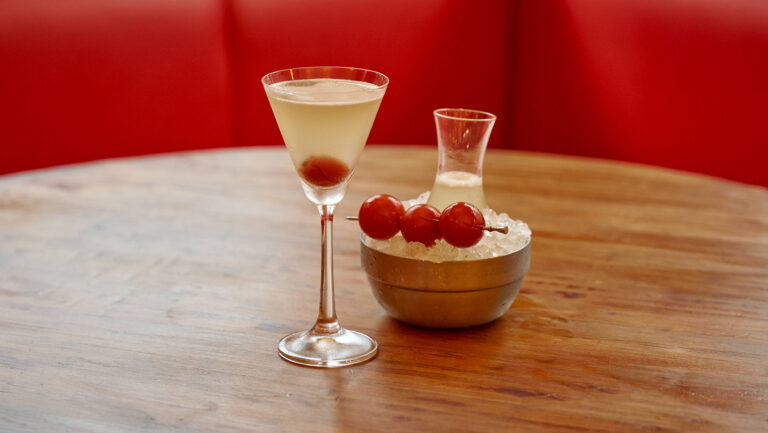
At Bar Etienne in Manhattan, cofounder and bartender Keith Larry says the most popular drink is the Martini Tomate with blended Castelvetrano olives, clarified tomato, five-year-old parmesan, fresh oregano, and a dash of saltwater. There’s a mushroom Martini with shiitake mushrooms and MSG, too. A top-seller at fellow Manhattan bar Bateman’s is The Sea Urchin Ceviche, a riff on a Pisco Sour utilizing seaweed- and lemongrass-infused pisco that co-owner and director of operations Carlo Olcese calls “an umami bomb.” At Four Walls in Nashville, the What Holds Value Here has Glenmaicha-steeped Japanese whisky, kobosu, red miso, sesame, cardamom, and sparkling sake.
“Umami expands the vocabulary of a cocktail,” says Azmee. “Savory drinks can sometimes become very literal—tomato, olive, celery, pepper—but umami gives you another dimension to explore.”
The Umami Trend Takes Root in Fungi
Bartenders have developed a range of techniques for incorporating umami into cocktails, using ingredients from daikon and dashi to MSG and miso. But growing interest in umami-forward drinks has also paved the way for a small but growing category of spirits that make the flavor easier to achieve, particularly through the use of mushrooms.
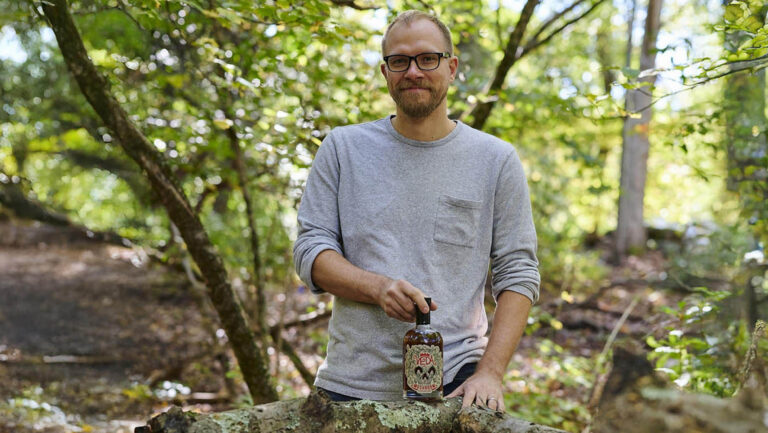
Mushrooms were among the first umami ingredients to grow in the drinks space, and they’ve become a particularly prominent ingredient in the emerging umami spirits category. Growing fungi interest has helped fuel overall umami enthusiasm for diners and drinkers, leading to a wave of spirits including Veda Mushroom Liqueur, Isolation Proof Mushroom Gin, and Mushroom Reserve 030 Gin from Amass. There are mushroom-based non-alcoholic canned cocktails, too, including Little Saints, and the mushroom craze has drifted into craft beer with offerings like Old Town Brewing‘s altbier with candy cap mushrooms and West Kill Brewing‘s Reishi Mild, an English mild ale with foraged reishi mushrooms. “People started taking mushrooms as supplements, putting them in coffee; they became a hot item at restaurants—they became ubiquitous,” says Adam Starowicz, the cofounder of Veda, who says that the movement inspired cofounder Jeremy Block to bring it to alcohol.
At first, Starowicz thought the answer was simply because mushroom spirits “taste bad.” Throughout Starowicz’s experimentation, he learned that distilling with dried mushrooms created an unpleasantly “musty” spirit. He and Block eventually figured out a solution: distilling the spirit, then infusing it with fresh mushrooms. Veda achieves the magic of umami bartenders often cite— it’s not always about noticing the individual flavor, but more about creating a complex, richer profile with greater depth.
The Expanding World of Umami Spirits
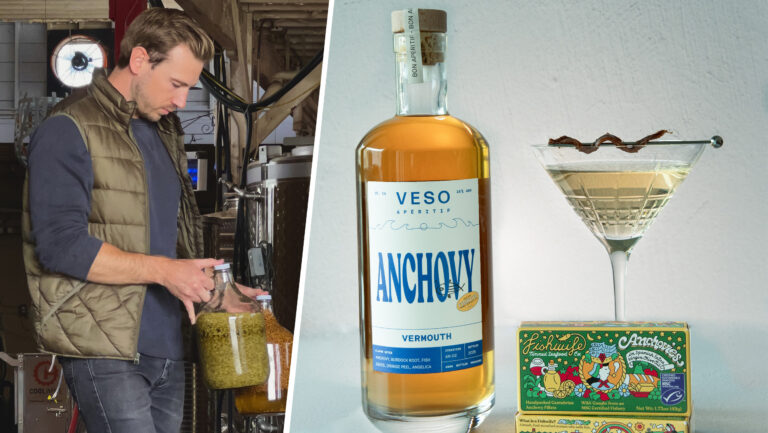
For Veso founder Chris Beyer, experiencing Dirty Martinis that ventured past just plain salty inspired him to craft a vermouth that was “complex and savory instead of pure brine.” He created Olive Vermouth and Tomato Vermouth, then got “deep into the science of savory, taking almost a chef’s approach to building umami,” he says.
The goal was to develop intensely savory flavor by layering ingredients naturally rich in glutamate, inosinate, and guanylate. “Once I understood how to stack those, I wanted to make the most savory, dirty vermouth possible, and anchovies were an obvious fit,” says Beyer.
In hopes of causing a stir, Veso announced Anchovy Vermouth’s debut on April Fools’ Day in 2025. “The hope was that some people would beg for it to be real and others would say, ‘I know this is a joke, but I’d buy it if it was real,’” Beyer says. “That’s exactly what happened.”
Veso partnered with tinned fish brand Fishwife, using their tinned Cantabrian anchovies. The oil is drained and the fillets are infused with grape brandy for four weeks, then pressed, creating a funky, concentrated anchovy spirit infusion. They separately infuse botanicals and more umami flavor with shiitake mushrooms soaked in brandy, plus a little fish sauce. “It’s such a unique flavor that it becomes a really fun tool for bartenders,” Beyer says. “It’s ultra umami and funky, and a small amount works as an umami boost in a lot of different drinks.”
Maison Gabriel Boudier‘s Nori Seaweed Liqueur was created by bartender Matthew Cusworth, who entered the recipe in the annual Gabriel Boudier Wizard Awards in 2021. The liqueur is made with wild, hand-harvested nori and dulse seaweeds from Brittany, France. Once the nori is dried, it’s macerated separately in a neutral beet spirit, then blended with grapefruit distillate and lime juice. By the time Nori launched, Cusworth’s idea responded perfectly to the growing umami movement in drinks, says Florian Migeon, the French brand’s marketing director. “The U.S. is where we see [umami demand] most clearly,” he says. “The growing interest in umami there has significantly boosted Nori’s sales, with American bartenders putting it on menus to build more complex, savory drinks.”
Miko Aboulsaf, the founder of Audemus Spirits, beat the current umami explosion by several years, first launching an umami spirit in 2014 and then following it with Umami Gin in 2017. “One of the first things I distilled were capers. The spirit was absolutely beautiful, so bright, so incredibly caper-y,” says Aboulsaf. After more tinkering, he landed on Parmigiano Reggiano as the spirit’s umami backbone, macerating, rather than distilling, to retain the cheese’s glutamates. Bergamot and juniper add a fresh, citrusy zing, and the spirit really comes together as it rests in Cognac barrels. Umami Gin isn’t currently available in the U.S., where Aboulsaf says he’s observed growing interest in umami flavors. But its presence has grown in France and the United Kingdom, where bartenders are exploring new ways to deliver savory flavors in cocktails.
Like culinary ingredients, umami spirits can inspire creative cocktail recipes while bringing new dimensions to familiar classics. Audemus’s Umami Gin and Veso’s Anchovy Vermouth can add complexity to Dirty Martinis and make for intriguingly savory Negronis. Veda’s mushroom liqueur lends earthy umami nuances to a Paper Plane or Moscow Mule, while Migeon says Nori Seaweed Liqueur has become a popular addition to Daiquiris in European bars. By making these complex, culinary-inspired flavors more accessible, umami spirits could help move savory cocktails from a passing trend to a lasting fixture of the industry.

Dispatch
Sign up for our award-winning newsletter
Don’t miss the latest drinks industry news and insights—delivered to your inbox every week.
Courtney Iseman is a drinks writer and consultant based in New York City. She is level-one certified in spirits education by the Wine & Spirit Education Trust and a cicerone certified beer server. Her work has appeared in outlets including The Washington Post, Bon Appétit, Inc., Slate, Food & Wine, Wine Enthusiast, Punch, VinePair, and Craft Spirits & Distilling.