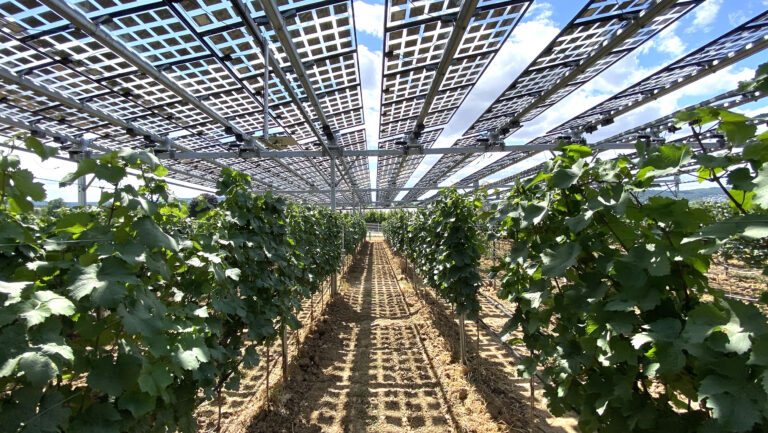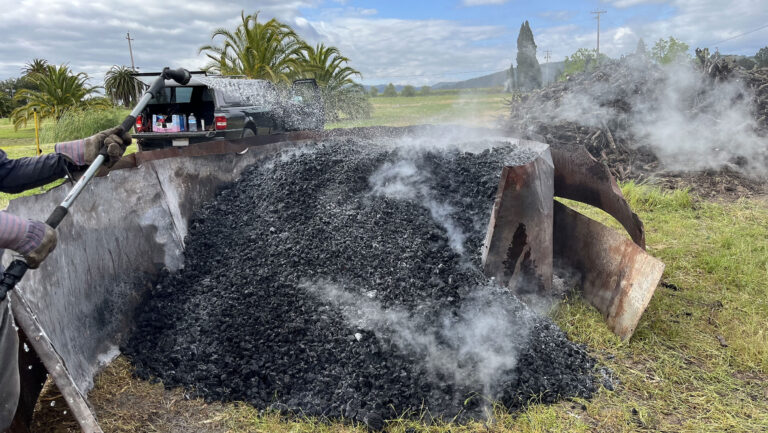
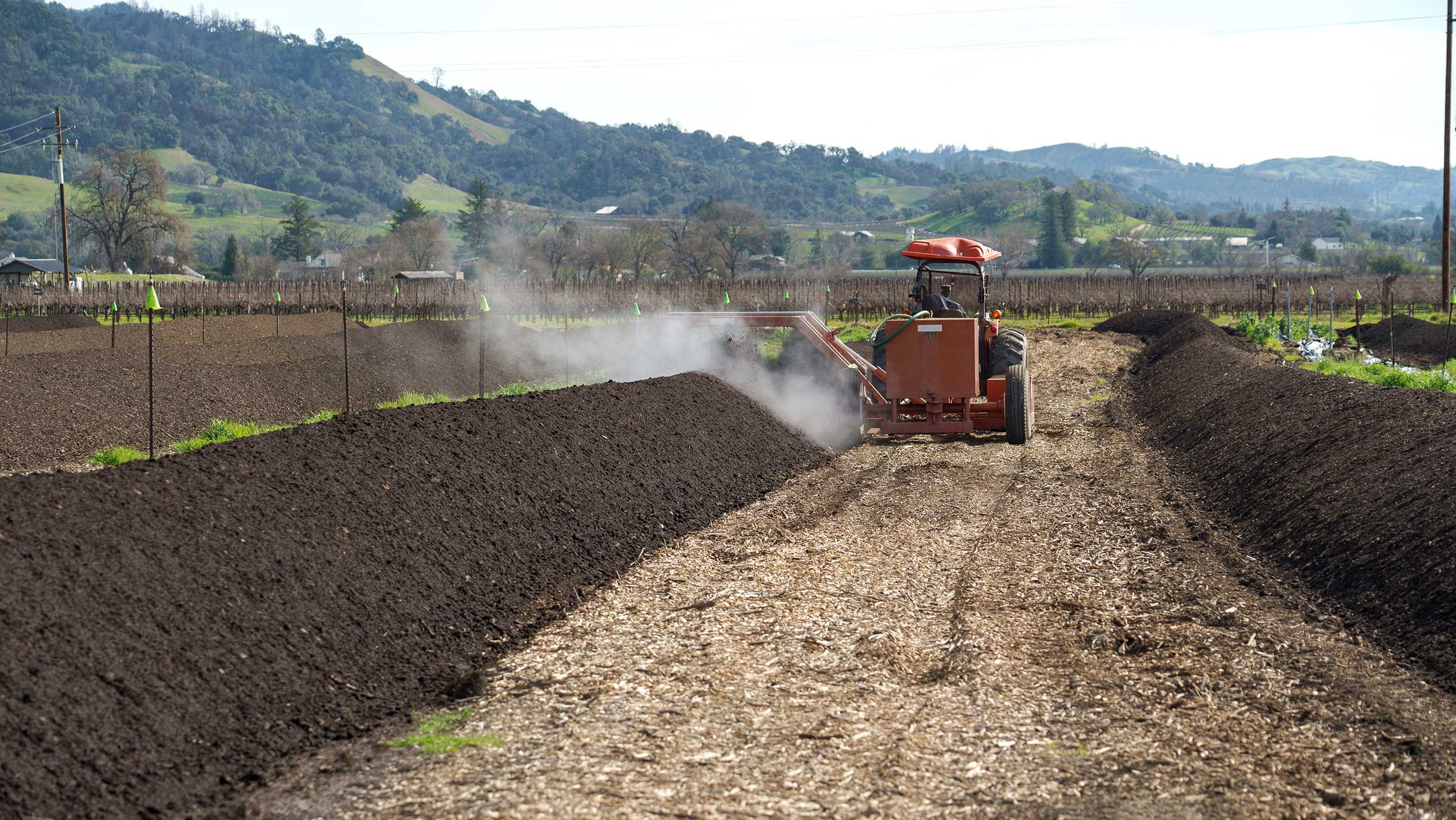
By now, the wine industry can agree: regenerative viticulture is more than a trendy buzzword. This holistic farming approach is gaining momentum as a proven method of increasing the health and vitality of soil, plant, animal, and even human life. But for regenerative farming to truly make an impact on the wine industry at large, it needs to be adopted by both boutique operations and large-scale brands.
Bonterra Organic Estates in Mendocino, California, which bottles nearly two million wines each year, was one of the first companies to embark on regenerative farming at scale. All of the company’s 850 planted acres are Regenerative Organic Certified (ROC) through the Regenerative Organic Alliance. These vines are the source for Bonterra Estate Collection wines and the Single Vineyard Collection, bottlings that boast the ROC stamp since the 2021 vintage.
As leaders in this sector, the viticultural team at Bonterra is constantly educating the wine community on the benefits of regenerative practices. “We don’t want to be the only ones doing this,” says Joseph Brinkley, Bonterra’s senior director of regenerative organic farming. But convincing more producers to move towards regenerative viticulture can be a feat; when a grower comes from a conventional farming background, says Brinkley, the notion of a new approach can be daunting.

Don’t miss the latest drinks industry news and insights. Sign up for our award-winning newsletters and get insider intel, resources, and trends delivered to your inbox every week.
The educational and financial barriers to going regenerative can represent major hurdles for some farmers, whether they work hundreds of acres or just a few. Is it possible to overcome the challenges of transitioning and get the wine industry to adopt regenerative viticulture at scale? Here, wineries with experience going regenerative discuss the path towards large-scale adoption.
Education Is Key
Stephen Cronk, the proprietor of Domaine Mirabeau, which distributes its recognizable rosé in more than 40 countries worldwide, experienced the challenges of going regenerative firsthand when he and his wife first purchased their 50-acre Provence estate in 2020. “We realized soon after we bought the property just how depleted the soils were,” says Cronk. “We were always going to go organic, but organic alone wasn’t going to provide us with a pathway to repair our soils.” Once he discovered regenerative, he knew this was what was needed to create a fully functional farm again. Today, Domaine Mirabeau is certified ROC and Regenified, but certified estate plantings only make up a small percentage of total production. It’s here that he’s hoping to make the most difference—convincing grower partners to transition.
This was, in part, his motivation to cofound the nonprofit Regenerative Viticulture Foundation (RVF). He wanted to help educate his partners, but also make regenerative more approachable to viticulturists worldwide. Cronk says that initial hesitations often come simply from not knowing where to start, what defines regenerative, and if certification is the right path for the business. “The great thing about applying regenerative practices is that the practices can be applied gradually and it’s not necessarily a seismic shift,” he says. “The RVF is trying to communicate that the barrier to entry can be low; it’s more about understanding the principles of soil health and working as part of a diverse ecosystem rather than a monoculture.”
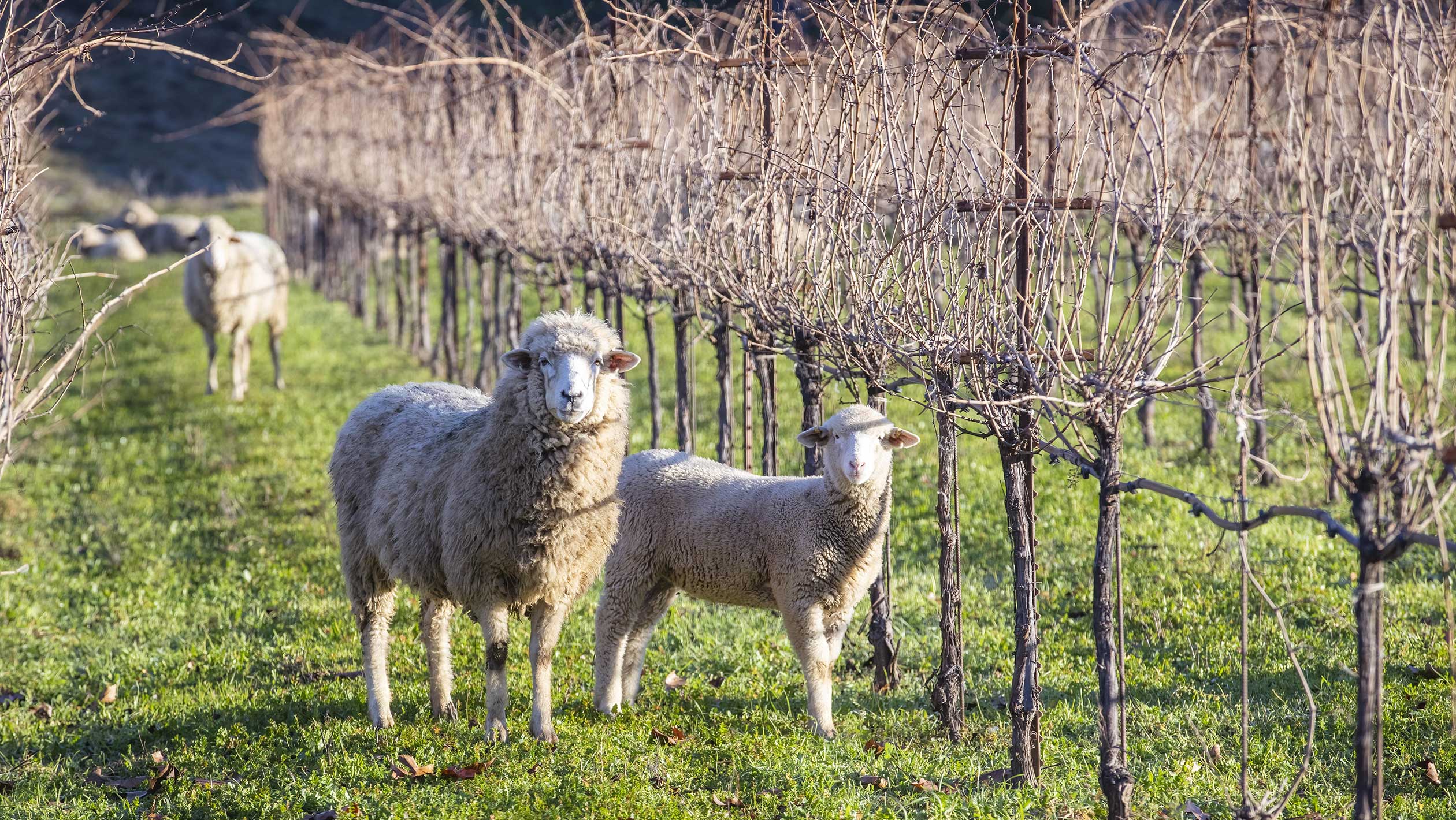
Caine Thompson, the head of sustainability for O’Neill Vintners & Distillers and a trustee for the RVF, agrees. He, along with his O’Neill colleagues and RVF cohorts, is dedicated to educating growers of all sizes on best practices toward transitioning to regenerative farming. The nonprofit conducts several online webinars as well as educational, in-person workshops. At the most recent live event at Robert Hall Winery in Paso Robles—where Thompson spearheaded the property achieving ROC status in December 2024—over 60 growers attended. “There’s significant interest in regenerative farming from all types of growers from small to large,” says Thompson.
The workshop also acted as the launch of RVF’s One Block Challenge, a program encouraging farmers to experiment on their own property on a small scale. “It could be their worst block, their least-performing block, so that they’ve got the least to lose—or maybe the most to gain,” explains RVF programming director Becky Sykes. “They take that block and then they do some really simple monitoring measurements on it themselves. This can be anything from water infiltration tests, reduced tillage, or cover-crop usage.”
Higher Costs, but Higher Quality
The proof is in the progress. For O’Neill, it all started with a 48-acre test parcel of Cabernet Sauvignon and Petit Sirah at Robert Hall back in 2020. Tracking the success of the regeneratively farmed area versus that of the conventionally farmed control lot, the data was convincing enough to let the experiment size grow. “We’ve seen a cumulative six percent increase in yield and a seven percent increase in cost with regenerative organic farming versus conventional farming,” says Thompson. “The yield increase is from less dehydration versus more fruit per vine, as the vines are more resilient to climate extremes. So, the fruit that’s harvested has been of better condition and hence better quality.”
The increased quality does come at a cost. “But the long-term benefits outweigh these initial costs,” says Isabel Vea Barbany, the global communications director for Familia Torres, which grows wine grapes throughout Spain, Chile, and California. “We are changing the way we manage our vineyards and cutting down other costs by reducing the use of tractors and phytosanitary products, for example.”
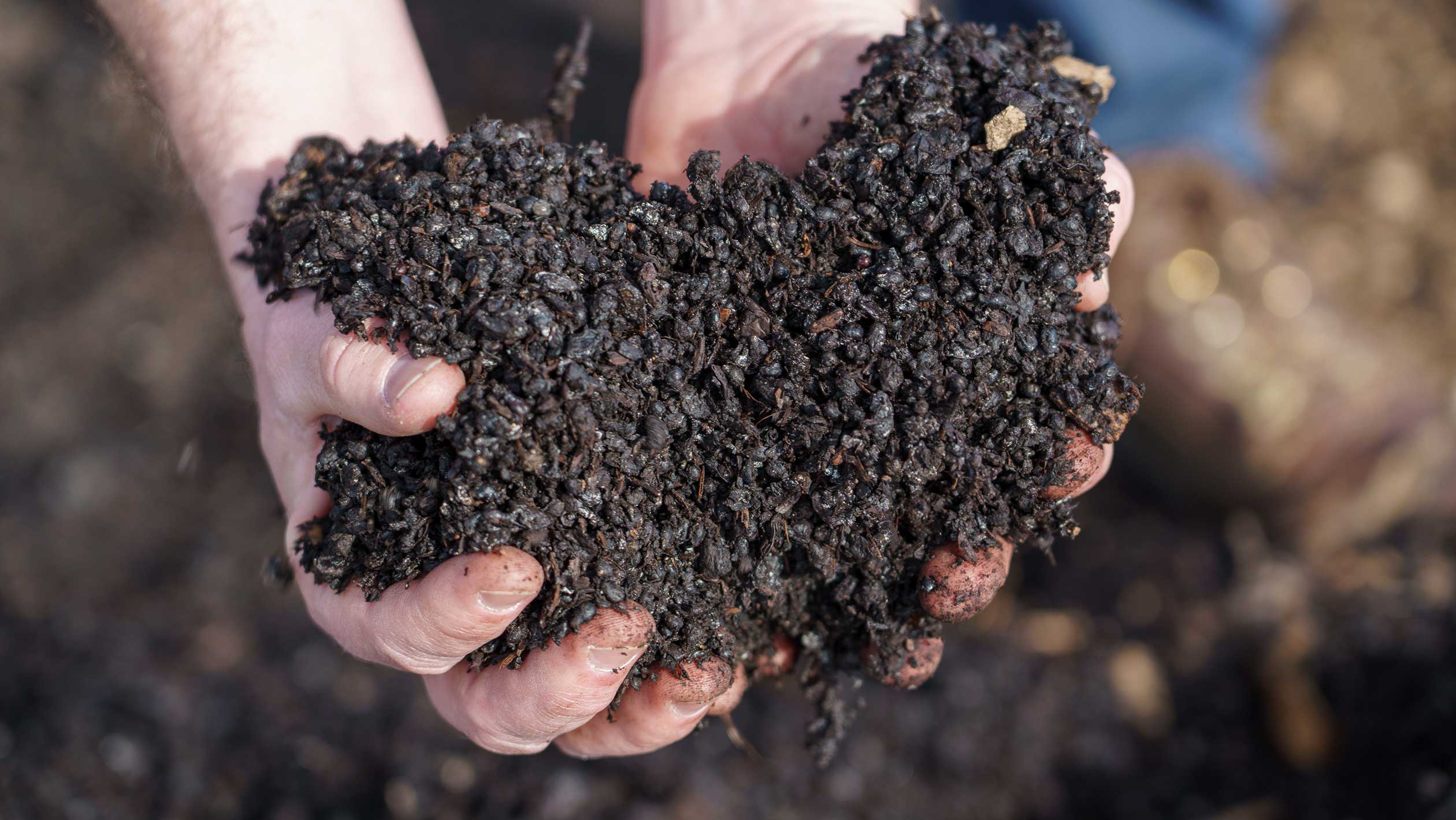
Further, particularly in these dry climates, the increase in organic matter in the soil means better water-holding capacity, resulting in less rainwater and topsoil runoff as well as lower irrigation needs, where used. Familia Torres now has nearly 1,500 acres of vineyards managed with regenerative practices (certified through the Regenerative Viticulture Alliance and Ecocert) and plans to expand the approach to all estates. “What we have observed within the first few years was an increase in microbial biodiversity of the soils as well as the presence of insects and birds in the vineyards,” says Barbany. “By turning our vineyards into natural ecosystems, they are becoming healthier and more resilient and, we believe, will translate into quality wines.”
“When you think about it, any new business endeavor any time you’re going down a path, it’s going to be more expensive,” says Sarah Wuethrich, the winemaker for the Maggy Hawk, which is part of Jackson Family Wines. The company stewards over 10,000 acres of wine grapes across California, Oregon, and Washington, and aims to transition all estate vineyards to regenerative practices.
“If you’re making the switch—equipment, compost spreading, purchasing compost—first-time expenses add up,” says Wuethrich. But over time—as the soils rejuvenate, the vines adapt, and new processes become routine—these initial costs depreciate. “And the longevity of the vineyard [increases],” she says. “Needing to replant and reestablish vines and wait three to five years for production—that’s expensive. One of our goals with focusing on these regenerative practices is to extend the life of our vines. It makes financial sense and, selfishly, I want to make wines from older vines. I feel they have more of a story to tell.”
Dollars and Demand
Data is still being gathered as growers and producers analyze costs versus financial gain. “It’s hard to put a number on ROI as it depends on so many factors,” Cronk points out. “The main factor is the starting point of the vineyard. For example, if they’re already biodynamic and have high levels of organic life in their soil, then there are likely minimal additional costs—in fact, possibly savings. [But] if it’s a highly industrial set up, then the costs might be higher initially and the ROI more challenging.”
Brinkley also notes that results are highly dependent on the price point of the bottle or grapes being sold. “If you’re at the $12 or $50 or $300 [per bottle] zone, it’s a different answer. The economics shift drastically for what consumers are able and willing to pay.”
To that end, Brinkley also stresses that when it comes to the viability of regenerative viticulture as a mainstream practice, the onus is on the consumer. “We can’t farm if people aren’t buying our wines,” he says. “I’d love to see a whole lot of consumer fire for regenerative or even organic. That’s when and where I think producers will respond. If there’s not a great market, producers have other things to worry about.”
Thompson echoes this sentiment. “In order for adoption to advance,” he says, “it will come down to consumers seeking our regenerative-certified brands and retailers and restaurateurs seeking regenerative-certified wines for their stores and restaurants.”

Dispatch
Sign up for our award-winning newsletter
Don’t miss the latest drinks industry news and insights—delivered to your inbox every week.
Stacy Briscoe is an award-winning journalist with 10 years experience writing for and about the wine industry. She’s held multiple roles throughout her career, including managing editor of Wine Enthusiast magazine, managing editor for Wine Industry Network, assistant editor of Wine Business Monthly, and staff writer for Wines & Vines magazine. You can find her byline in notable drink-centric publications such as Somm Journal, SevenFifty Daily, Sonoma Magazine, Full Pour, and GuildSomm, among many others. Briscoe regularly speaks at wine industry events, has completed her WSET Diploma, teaches WSET courses at the Napa Valley Wine Academy, and, most recently, has been accepted as a Master of Wine Stage 2 student, having completed Stage 1 in 2024. Follow Briscoe on Instagram @stacyloubriscoe and at her website BriscoeBites.com.