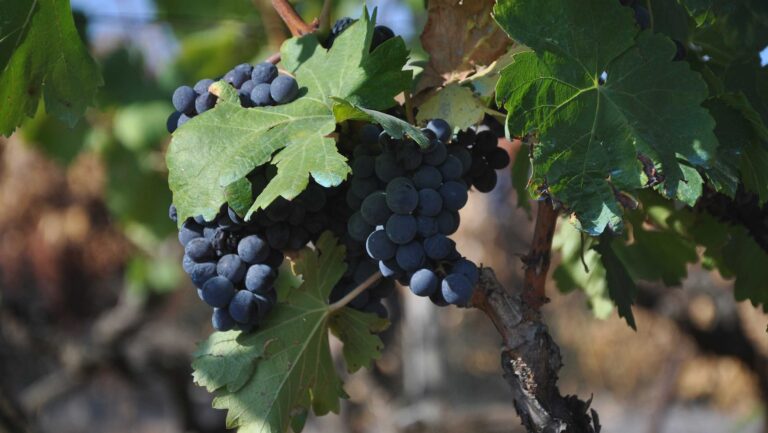
The 2011 vintage of Napa Valley red wine was widely considered subpar, to say the least. It was a difficult vintage with less-than-ideal climate conditions. An unfortunate combination of a cold spring, delayed ripening, and heavy fall rains resulted in rot and low yields for many producers.
“It was brutal,” recalls Steve Matthiasson, the winemaker and founder of Matthiasson Wines. “We thought it was a wipeout because it’s the one and only time we’ve had botrytis in Cabernet Sauvignon in my 32 years of working in the vineyards. Everyone told us the wine wasn’t going to be any good.”
As some winemakers feared, the weather events of the season did impact some wines from various parts of the region, and the press picked up on it. Wine Spectator gave the 2011 vintage of Napa Valley red wines a mere 86-point rating, and Robert Parker’s Wine Advocate an 82—dismal scores for a region typically bestowed with ratings in the mid-90s. “The critics just wrote it off,” says David Gates, the senior vice president of vineyard operations for Ridge Vineyards. “Napa couldn’t make the style of wine that they had been wanting to make—those big, luscious, beautiful Cabernets that are really ripe, really sweet, just gorgeous, but don’t live very long.”

Don’t miss the latest drinks industry news and insights. Sign up for our award-winning newsletters and get insider intel, resources, and trends delivered to your inbox every week.
And yet, open a 2011 bottle of Matthiasson Cabernet Sauvignon today and it’s drinking as well—if not better—than the year the wines were released. “I love the wines we made in 2011. It’s my favorite vintage,” says Matthiasson.
Gates agrees that, despite the challenges, in some parts of the region, particularly areas with high-elevation vineyards, 2011 produced “beautiful wines.”
“The people that excelled in 2011 were those that didn’t make that big, luscious style to begin with like Corison, Spottswoode, or Mayacamas up in the mountains. They never made those wines, and they were just fine in 2011,” says Gates. “But the critics wrote it off, so it was hard to sell 2011 Cabernet just because of that.”
For generations, the definition of a successful vintage has been closely tied to a region’s ideal growing season. Yet the 2011 Napa vintage illustrates the limitations of that thinking, particularly as climate change increasingly challenges long-held assumptions about the conditions necessary to produce great wine.
Moving Beyond Outdated Ideals of Growing Seasons
Historically, wine regions have relatively established expectations for ideal growing seasons. In cooler regions, sufficient warmth and ripeness could be indicators of the quality that shows in the bottle. In warmer regions, too much sunshine could risk overripeness without sufficient acidity, and dry conditions could risk drought. However, as temperatures rise across the globe, producers are experiencing weather events marked by frost and heat spikes, drought and wildfires, heavy rain and elevating disease pressures.
“No question, the climate is changing with summers drier and warmer,” says Philippe Pascal, the founder of Cellier aux Moines in Burgundy. “It means maturity is speeding up. We used to need 100 days between the flowering and full maturity [of the grapes], but now it could be 85 to 90 days. And it’s important to watch maturity evolving especially in the last weeks before harvest.”
Picking officially began this year in Burgundy on August 13, the earliest harvest start date recorded in nearly 500 years. Many parts of the region were plagued with frost early on in the season, followed by drought and extreme heat, resulting in accelerated ripening and lower yields. On paper, 2026 has all the signals of a challenging vintage that may result in unbalanced wines with higher-than-usual alcohol.
But Pascal isn’t too concerned. He is just one of many winemakers in Burgundy and beyond who has mastered the speed and wherewithal required to manage unpredictable weather. It’s that adaptability and quick decision-making that winemakers increasingly rely on to turn out wines of quality despite the obstacles of the growing season.
“Obviously, we’ve needed to adapt our farming practices,” says Pascal. “We have to be extremely attentive and proactive to help nature in its adaptation. For us, becoming organic and practicing biodynamics has helped us improve our farming skills, anticipate better, and adapt to climate change, hence helping us improve the quality of our grapes.”
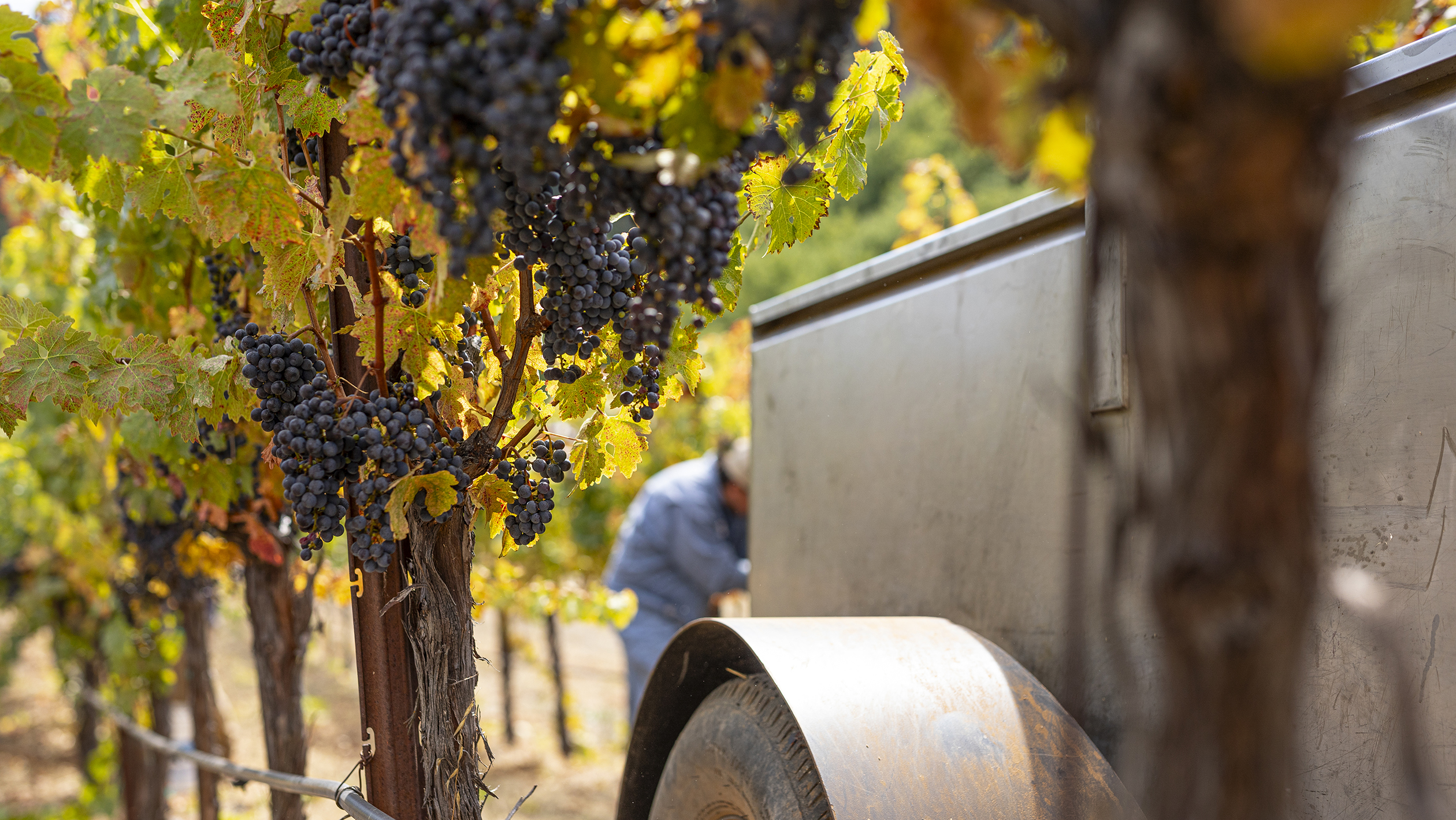
The ability to adapt to changing conditions has always been essential to successful winegrowing. But as weather patterns become more erratic, the timing and precision of those decisions are becoming increasingly critical to the outcome of a vintage. “Timing of viticultural practices, training your vines to withstand heat stress, and regulating crop loads are all things that we need to adapt to the growing season,” says Gates. “Making sure that your whole team is working toward the same goal and having the resources to act as needed is key.”
Of course, weather has never been the sole determining factor of vintage quality, but as growing conditions become more variable, the influence of a winemaker or grape grower’s quick decisions could have greater impact in an overall vintage assessment. “In the end, a vintage is the result of the interaction between climate, place, vine, and human decisions,” says Elena Pozzolini, the winemaker at Tenuta Sette Cieli in Bolgheri. “The climate gives you the starting conditions and guides the season. It does not determine the final wine on its own.”
When Difficult Vintages Deliver Great Wines
A difficult growing season doesn’t necessarily indicate a disappointing vintage. Some winemakers approach each year on its own terms, adjusting their decisions to the conditions at hand rather than measuring success against a fixed idea of what an ideal vintage should produce. Some believe, then, that the decisions made in the vineyard and winery throughout the growing season should carry as much weight in assessing vintage quality as the conditions themselves.
For Matthiasson, the 2022 vintage in Napa is a prime example. In early September of that year, a prolonged heat wave brought temperatures above 100 degrees for nearly a week, creating challenges for vineyards across the region. But Matthiasson had already harvested all of his fruit. “We were all in. We didn’t have any fruit out,” he recalls. While the heat created significant challenges for others, Matthiasson considers 2022 a “great vintage” for his wines. The difference, he says, came down to decisions made throughout the growing season, particularly how the vineyards were managed to support earlier picking.
However, picking early isn’t just an issue of moving up the harvest date. Matthiasson says it requires managing the vines throughout the season so the grapes can develop the desired characteristics before sugar levels climb too high. “Global warming lets you have high alcohol, but it doesn’t dictate that you have high alcohol,” says Matthiasson. “You can pick whenever you choose. You just have to grow the vines a little differently if you’re going to pick earlier because if you have too much irrigation and fertilizer, then the fruit’s not ripe canonically. And that’s where I think organic farming comes in, letting the vines go through their arc and have the proper amount of struggling at the end.”
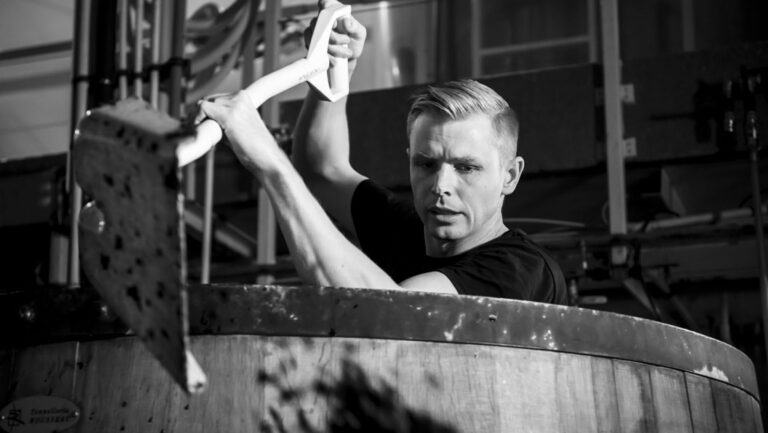
Similarly, 2022 in Tuscany saw intense heat and drought that had many expecting wines that were very high in alcohol, but Tenuta Sette Cieli produced wines that Pozzolini says were “beautifully balanced between power and elegance.” She credits the characteristics of the vineyard as well as vineyard management for the vintage’s success. “This is something that I learned very clearly in recent years: in difficult vintages, precision becomes even more important.”
Challenging vintages of the past can also provide valuable lessons for navigating unpredictable growing conditions. Heavy rainfall led to large crops across Marlborough in 2018, says Nick Entwine, the winemaker at Wairau River. “It was a really challenging vintage,” he says. When Entwine faced similarly harsh rains in 2022, the “wine quality was far and beyond better than it was in 2018.” The reason? Entwine says his team learned from the 2018 vintage and exchanged information about what did and didn’t work with neighboring wineries, and that effort has helped Wairau River better react and respond to events that could later impact quality.
Ultimately, what determines a successful vintage comes down to the wines themselves—and the qualities winemakers want to convey. “For me, a great vintage has always been one in which the vineyard is able to transform the conditions that nature has given us into balance, identity, and longevity,” says Pozzolini. “What has probably changed is the way I interpret those signals. Today, it is not enough for me to see concentration or ripeness. I want to see ripeness and freshness together—energy, precision, and the ability of the wine to develop over time.”
Beyond the Regional Vintage Rating
Traditional vintage chart ratings can be informative for members of the trade, and the maturity windows can be especially helpful for consumers trying to decide when to buy and open wines. However, they often reduce the quality of an entire region’s growing season to a single numerical score, leaving little room to account for differences among subregions and individual vineyard sites. Factors including elevation, proximity to the sea, microclimates, and stylistic decisions can all influence the final wine, but those aspects aren’t necessarily reflected in broad regional assessments. As a result, a poorly rated vintage can overlook exceptional wines produced under vastly different conditions.
“A region-wide assessment remains useful as a framework, but in Montalcino, it only tells part of the story,” says Matteo Bagnoli, the winemaker at Castello Banfi. “The same vintage can produce very different expressions depending on elevation, exposition, soils, and microclimate. The real insight comes from seeing how each site tells the story of that vintage in its own way.”
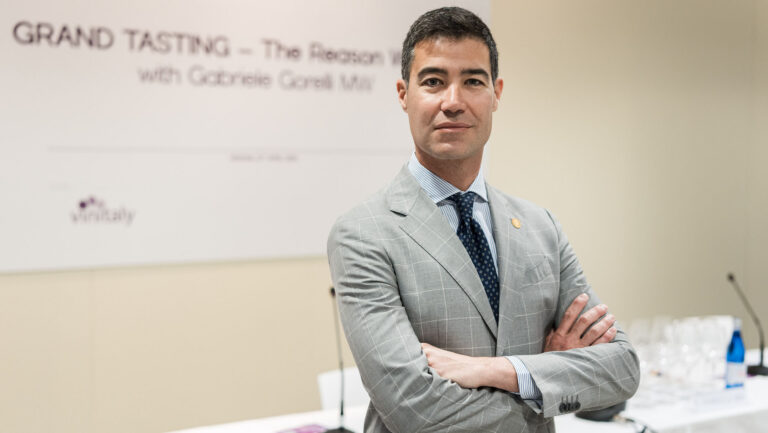
In an effort to move beyond such broad assessments, the Consorzio del Vino Brunello di Montalcino introduced Brunello Forma, a data-driven vintage evaluation system developed by Masters of Wine Gabriele Gorelli and Andrea Lonardi. Replacing the region’s traditional five-star ratings, the framework combines climatic data, chemical analysis, and blind tastings by an international panel of Masters of Wine to provide a more descriptive assessment of each vintage’s character and quality. “As the trend line moves towards higher temperatures, heat waves, and a varied distribution of more extreme precipitation, this old way of seeing the greatness of a vintage has become outdated,” says Gorelli. “Today the benchmark should be how the wine gets to the market.”
Rather than assigning a single quality designation, Forma seeks to communicate what distinguishes a particular vintage, offering buyers a more nuanced understanding of the wines they can expect. “Within a classic and established appellation, like Brunello di Montalcino DOCG, we can rely on the knowledge and skill of producers to get the most and the best from the vintage in spite of the challenges,” says Gorelli. “In this scenario, ‘bad’ is meaningless. We need to escape this facile, binary reasoning which is polarizing and unhelpful. When we evaluate vintages by personality, wines can reach a wider base of different customers for different reasons.”
How the Trade Interprets Vintage Quality
Evaluating vintages by personality could help wine appeal to different consumers and offer drinkers a more in-depth understanding of what happened in a year and how that could affect a wine. “People are so afraid of getting a bad bottle,” says Kaysie Rogers, MS, a member of the sommelier team at SingleThread Farms in Healdsburg, California. “But it’s all about telling the story as opposed to ‘good’ or ‘not good.’ Reducing a vintage to ‘good’ or ‘bad’ is so black and white. It’s about showing guests the many shades of gray that happened within a year.”
Before SingleThread, Rogers spent years of her career working in big steakhouses where she often recommended bottles of Napa Valley red wines from the 2011 vintage to guests, not just for the drinking experience they provide but for the opportunity to communicate the complexities of a vintage and how that translates to the wine. “Nobody wanted those wines,” says Rogers. “Everyone was like, ‘Oh my God, no, it rained. It did this. It did that.’ And I would always tell them that 2011 is one of the best vintages and one of the most underrated vintages of Napa Valley. Because of that cooler weather and that rain, the wine held onto acidity and it held onto tannin. And now, 15 years later, those wines are fantastic. They are structured, and they’re beautiful, and when people try them, they love them.”
Roger’s experience on the floor aligns with what producers have long observed in the vineyard—a vintage’s reputation doesn’t always tell the full story.
“There are way too many nuances involved to just call a good vintage or bad vintage, because you always find gems in something considered to be a less than optimal vintage,” says Gates. “You can always find poorly made wines in really great vintages. I don’t like putting those monikers on. I prefer to describe the vintage.”

Dispatch
Sign up for our award-winning newsletter
Don’t miss the latest drinks industry news and insights—delivered to your inbox every week.
Janice Brockenberry is a New York-based journalist and associate editor of SevenFifty Daily. Her work has appeared in print and online publications, including Newsweek, Wine Enthuthiast, VinePair, Essence magazine, and Full Pour magazine, among others. She holds the WSET Level II certification in wines. Follow her on Instagram at @browngirldrinkswine.