Korean soju and Japanese shōchū have long occupied the same corner of the American beverage alcohol market. Now they’re emerging as two distinct categories. There are significant drivers for this: the growth of Asian cuisine in the U.S., surging interest in cultural factors like K-pop and K-drama, moderation-minded drinking, and cocktail experimentation. But what does that growth look like today?
“Their trajectories are quite different,” says Koryn Ternes, an IWSR consulting director for the Americas. “Soju has seen long-term category acceleration, with particularly sharp growth post-2020, especially over the last two years, between 2023 to 2025. By contrast, shōchū has followed a much slower growth trajectory, reflecting its more niche position in the U.S. market.”
Soju represents less than one percent of total U.S. spirits volume as of 2025, but has increased 133 percent between 2019 and 2025. Shōchū accounts for what Ternes calls a “tiny fraction” of one percent, and has grown 11 percent over the same period.
Don’t miss the latest drinks industry news and insights. Sign up for our award-winning newsletters and get insider intel, resources, and trends delivered to your inbox every week.
“The market right now is demanding more soju so we bring in more soju,” says James Barlow, the fine wine and Asia portfolio manager at Spec’s in Texas. He notes shōchū is a “labor of love,” but soju is the high-performer.
Overall, Spec’s was purchasing less than $1 million in Asian spirits when Barlow joined the buying team in 2018; now, it’s in the multi-millions. Barlow credits the growth to both increased supply and rising demand from younger consumers, growing interest in Korean culture, and soju’s fruity flavors and lower ABV. “When I first started, it was really just Jinro, maybe a few others,” Barlow says. “Now, it’s saturated where I have to actually turn brands down, and I never had to do that before.”
The Rise of Green Bottle Soju
Soju is centuries old, but experienced a category-redefining shift in the 20th century. Rice shortages led to a 1965 ban on rice in distilling, causing producers to pivot to alternative starches with artificial sweeteners and dilution. The result was a sweeter, more fruity, and significantly lower-alcohol product. This cheaper, mass-produced “green bottle soju” became the dominant style, remaining so even after the rice ban was lifted in 1989. Soju from behemoth brand Jinro has been named the world’s best-selling spirit for 25 consecutive years. As a result, green bottle soju became the category’s dominant export to the U.S.
“Japanese and Korean food has been having its moment for a while now, and I think that’s the driver [of soju and shōchū growth],” says Lok Yan Li, the Japanese and Asian beverage portfolio manager at Skurnik Wine & Spirits. “It’s easier for us to launch spirits on-premise. People come in, they’re familiar with the food, and so they’re willing to have this trial moment with their beverage. They see soju. They’ve maybe never had it before. They’re interested—then if they enjoy it, they go out and find it in the retail space, take it home, and share it with friends.”
“It’s a distilled spirit that hits sweet spots in two ways,” says Jun-Jun Vichaikul, the co-owner of Chicago’s Asian bottle shop and bar Konbini & Kanpai. “It’s got added flavors—peach, grapefruit, any flavor you can think of—and it’s mostly under 20% ABV. The market for that is skyrocketing. And it’s affordable.”
Today’s drinkers are more flavor-driven than category-loyal. They’re moderation-minded, and they’re cash-strapped. Green bottle soju is the spirit for the moment, but its long-term impact may depend on whether it leads drinkers to explore craft expressions.
A Market for Craft Soju
Over the past five to six years, craft soju has had a resurgence in Korea—the same is possible in the U.S. as green bottle soju drinkers mature and look to dig deeper into the category. “In Korea, and now here, too, I really track the interest of craft and traditionally distilled soju arising as parallel to the interest in things like sourdough, how different things are made, baking at home,” says Irene Yoo, the co-owner of Brooklyn’s Orion Bar and author of Soju Party: How to Drink (and Eat!) Like a Korean. “There’s a newer generation of makers realizing soju doesn’t have to be this mass-produced thing.”
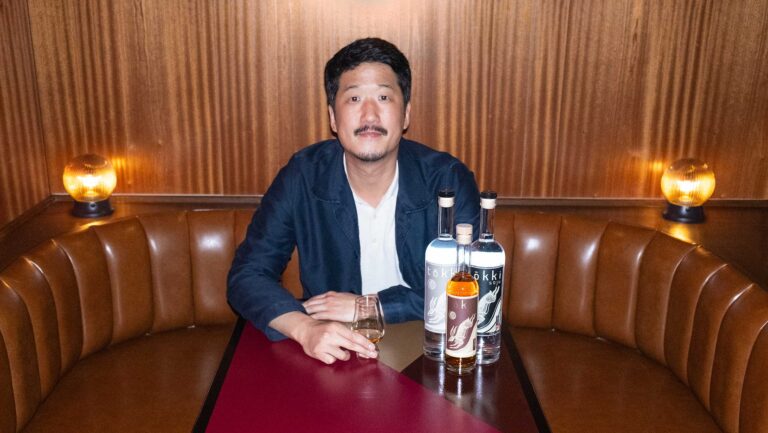
When premium soju producer Tokki Soju launched in 2016 in Brooklyn, the inclination among accounts and consumers toward green bottle brands like Jinro proved a hurdle. “As a Korean American, one of the most frustrating things in our first two years was establishments in [New York’s] Koreatown flat out rejecting us because we were trying to elevate the category and bring back this spirit as it existed pre-1960s in Korea,” says Douglas Park, the cofounder and CEO of Tokki Soju. More education was necessary to sell people on craft soju, and Park wanted his product to be widely available for those moments of discovery.
Park says Tokki Soju experienced “explosive growth” over the brand’s first seven years, doubling its volume each year. This has plateaued somewhat more recently, but this, Park says, is because the company is restructuring to continue scaling up in the future. The demand for craft soju that kicked off in Korea is now slowly developing in the U.S. as a result of consumers becoming more familiar with the category.
“You have flavored vodkas, people get into them, and then over time they move onto better vodkas, then gins,” Vichaikul says. “I think soju will see that same wave.”
For now, soju’s winning placement is on retail shelves. Behind the bar is where craft soju in particular can grow. Cocktail-driven bars and restaurants are the right platform for higher-alcohol expressions.
Shōchū Shines Behind the Bar
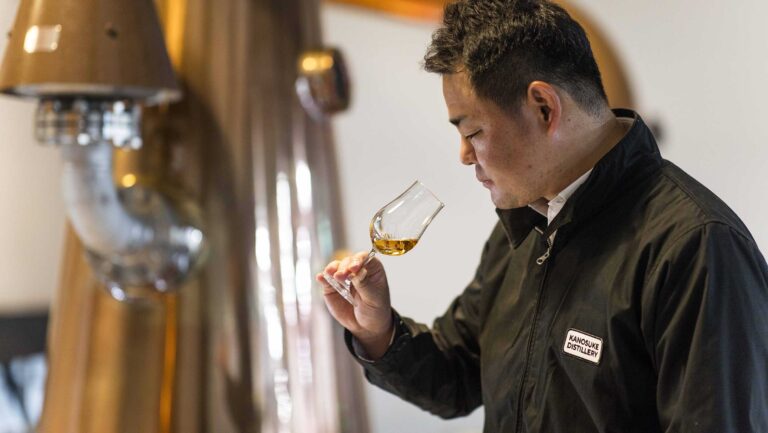
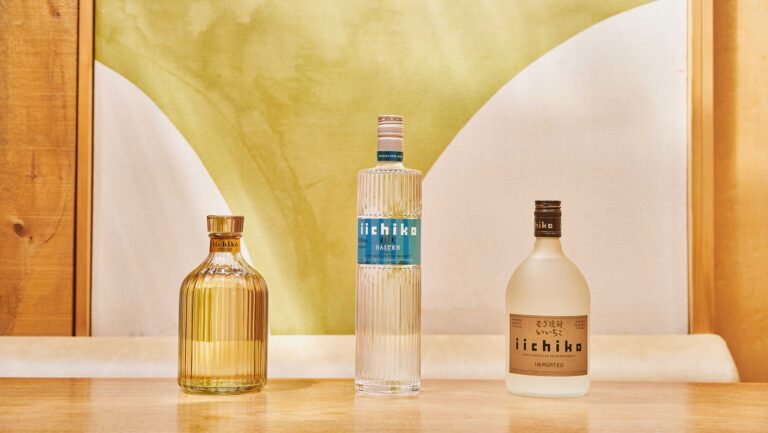
While Vichaikul says shōchū in retail still requires hand-selling, especially compared to established consumer knowledge around green bottle soju, the spirit’s presence on bar menus is on the upswing. Brands like iichiko and Mizunomai, also known as Mizu Shōchū, are leaning into the interest they see from bartenders and the various cocktail applications for shōchū.
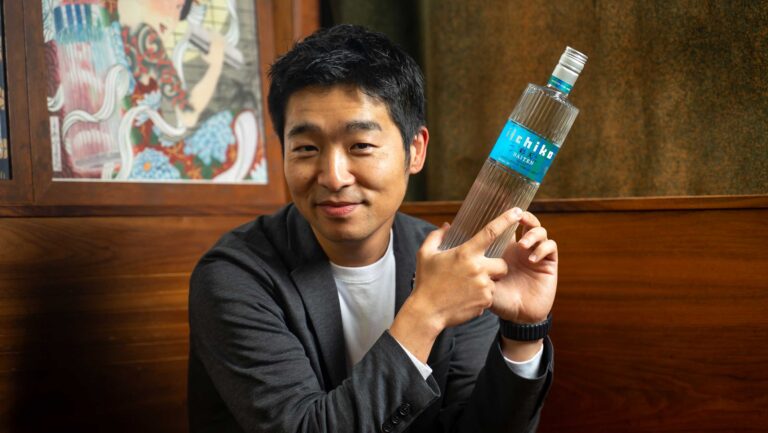
iichiko, established in 1979, is one of the best-known shōchū brands in Japan and is now leading the way for the spirit stateside. The brand launched iichiko USA in 2013 following the rapid expansion of Japanese cuisine in the U.S., according to iichiko general manager Kensuke Oka. The same year, Jesse Falowitz founded Mizu with Teppei Jeremy Kono.
“I was moving around the Asian Pacific at the time, going to a lot of the top bars and seeing the rise of Japanese whisky,” he says. “It was so abundantly clear to me that everybody in Japan was drinking shōchū. Then you step outside of Japan and shōchū was really nowhere to be found. It felt underrepresented.” Falowitz saw an opportunity in bringing such a strong-selling spirit in Japan to the rest of the world.
Bartenders are the key ambassadors for helping shōchū awareness spread outside of Japan, and brands are making the most out of that relationship. “Our efforts right now are put on trade and less so on the consumer,” says Falowitz. “For us, depending on the market, 80 to 85 percent of our sales come from on-premise.”
iichiko and Mizu’s diversity of flavors as well as their higher-proof options offer broader appeal. “I had a strong feeling that for people to fall in love with shōchū, it had to be on par with other craft spirits, and they tend to be around 40% ABV,” says Falowitz. “The idea of a spirit at 25% ABV seemed to be missing the mark for a wider audience, for cocktail applications, and for reaching the tequila or mezcal drinker used to sipping a spirit with more texture, body, and complexity.”
Kenta Goto, a bartender and the owner of Bar Goto in New York City, values the higher-proof options. “Many classic cocktails use spirits of 40% ABV or higher as the main ingredient,” he says. “Higher proofs allow [iichiko’s] Shinwa and Saiten to be easily utilized to make cocktails.” Bar Goto carries “a lot of shōchū on the menu,” Goto adds.
“Guest awareness of shōchū is noticeably higher than it used to be,” says Rio Azmee, the creative director and partner at Stone & Soil in New York City. “A few years ago, most conversations started with, ‘What is shōchū?’ Today, many guests already recognize the category, especially those who have traveled to Japan, dine at Japanese restaurants regularly, or have developed an interest in Japanese whisky and sake. Demand has grown alongside that awareness.”
Education is still required, Azmee adds, but the conversation has become more nuanced. “Instead of explaining what shōchū is, we’re increasingly discussing differences between barley, rice, sweet potato, or koji styles, and how they’re best enjoyed.”
The Next Wave of Asian Spirits
Soju and shōchū aren’t the only Asian spirits looking to grow in the U.S. Baijiu, the Chinese grain spirit and the world’s most-consumed spirit by volume, remains a niche category stateside, but industry experts see signs of opportunity.
At MAKfam in Denver, Colorado, general manager Shawn Meddock says most guests haven’t heard of baijiu, so the restaurant provides customer education via flights, cocktails, and tastings. “Just handing someone a neat pour of a 58% ABV spirit they’ve never heard of is a tough introduction,” says Meddock. “Giving it context, pouring a taste, or letting someone compare a few different styles side by side makes it much more approachable.”
“Maybe I’m being optimistic, but in the next five years we’ll see an uptick,” says Lok Yan Li, citing cultural interest, high-quality products, and bartender interest. Education will still prove a necessary lift, though, especially for baijiu.
“Baijiu is the alcohol of my people, says Yan Li. “It’s fascinating, and I don’t want to say it’s a difficult sell [in the U.S.], but the flavor profile and aroma are not what people are used to. Shōchū is less different, soju is more familiar, but there’s also a huge Chinese community [in the U.S.]. There could be a huge opportunity for baijiu without even having to cross over and create appeal with Western consumers.”
“Baijiu is seeing some movement in the U.S., but its trajectory looks more like shōchū than soju,” Ternes says. “The next stage of growth will likely depend on whether baijiu can expand beyond traditional Chinese dining and gifting occasions into broader cocktail, food-pairing, and discovery-led moments.”
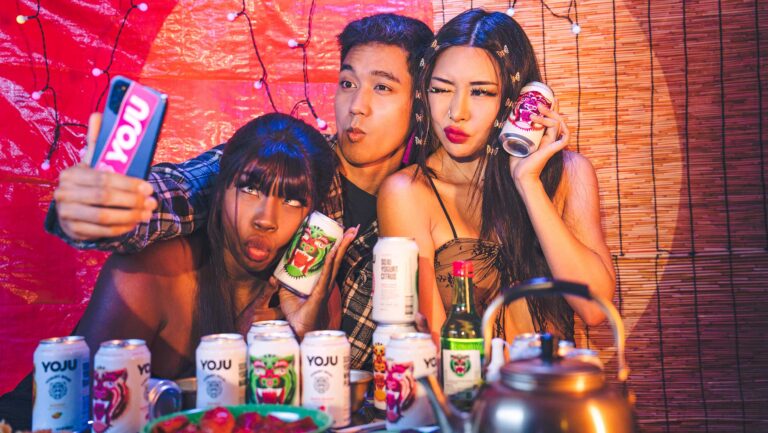
Ready-to-drink cocktails might seem like the next logical growth opportunity. However, that trend hasn’t translated as clearly. Yoju, an RTD line founded in 2022 and inspired by the Korean yogurt soju cocktail, has doubled its sales each year. Even so, cofounder Steven Tang says consumers are more likely to buy a soju RTD once they’re already familiar with soju. “Soju is already a little bit like an RTD,” he says. “It’s mostly flavored sojus that are popular in the U.S.—so, it’s already heavily flavored, like a BuzzBallz at around 13 to 15% ABV.”
Retailers see a similar pattern. Barlow says RTDs have gained little traction at Spec’s, where shoppers gravitate toward bottled soju instead. Despite that, the broader outlook remains positive.
Even if RTDs don’t emerge as a major driver of Asian spirits, the long-term outlook for soju and shōchū remains strong.
“IWSR is forecasting growth for both categories, though soju is expected to grow at a much faster rate and from a larger volume base,” says Ternes. “Soju volumes are expected to grow by 94 percent between 2025 and 2030. Shōchū is also expected to see continued growth, though more modestly, with volumes forecast to increase 27 percent by 2030.”

Dispatch
Sign up for our award-winning newsletter
Don’t miss the latest drinks industry news and insights—delivered to your inbox every week.
Courtney Iseman is a drinks writer and consultant based in New York City. She is level-one certified in spirits education by the Wine & Spirit Education Trust and a cicerone certified beer server. Her work has appeared in outlets including The Washington Post, Bon Appétit, Inc., Slate, Food & Wine, Wine Enthusiast, Punch, VinePair, and Craft Spirits & Distilling.