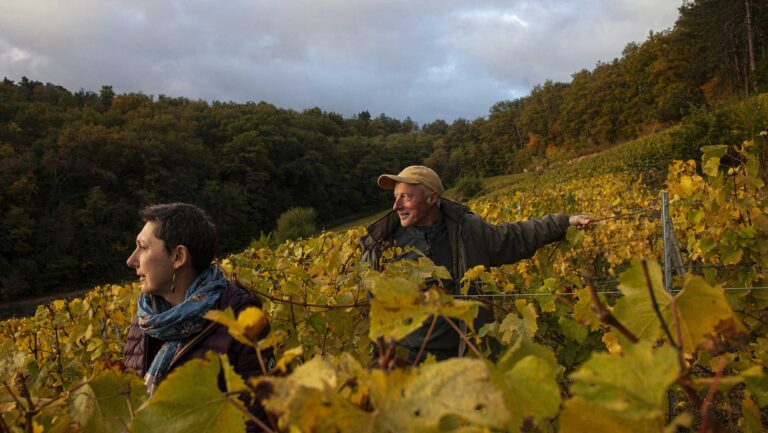
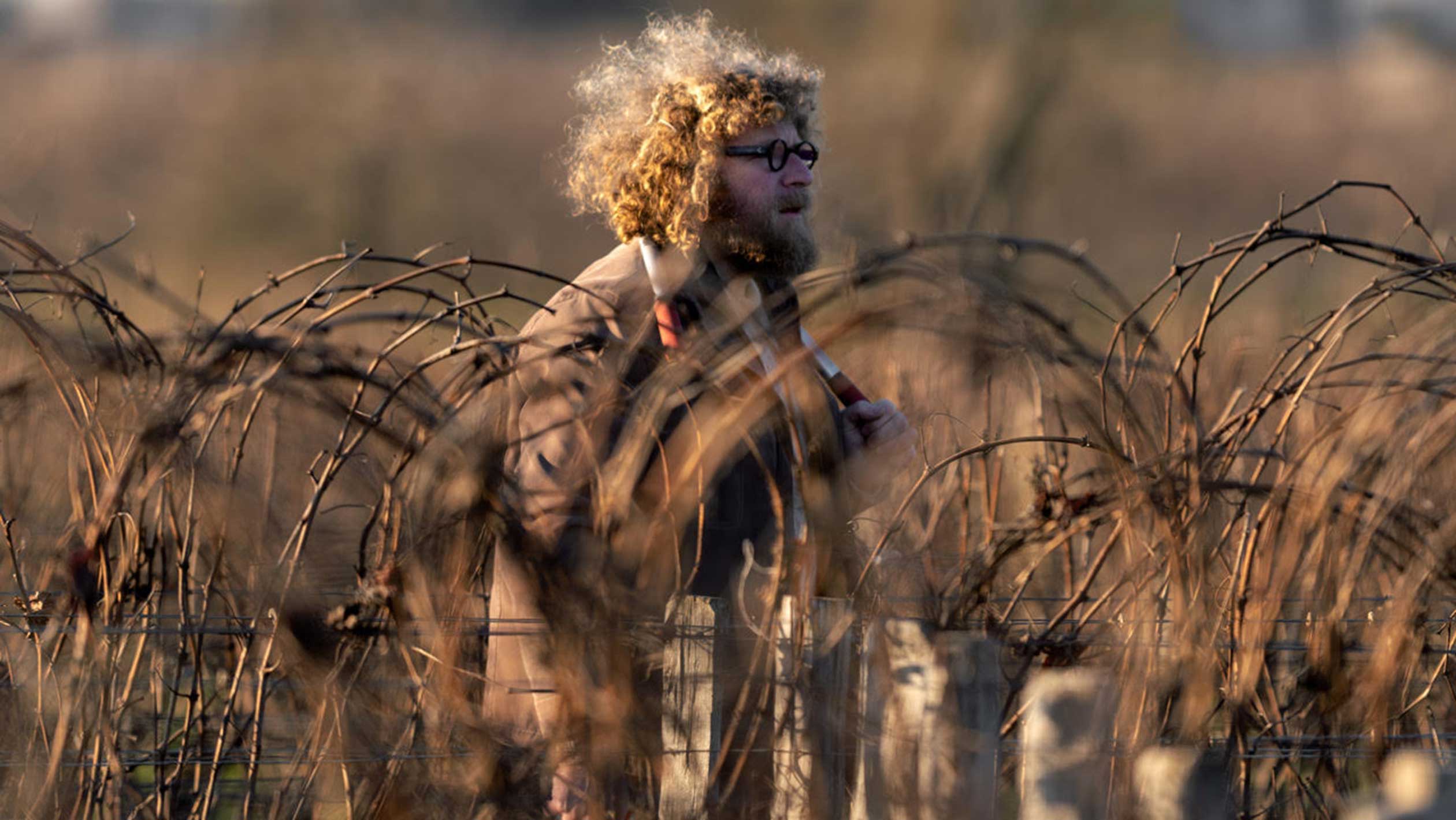
Sylvain Pataille has always marched to the beat of his own drum. He founded his namesake estate back in 1999 while working as an enologist for estates across Burgundy, and over the past 25 years, he has become a benchmark producer for wines from Marsannay, as well as for Burgundy’s secondary white variety, Aligoté.
Today, sommeliers and retailers alike clamor for Aligoté and readily seek out Burgundies from lesser-known villages like Marsannay, which does not have any premier or Grand Cru vineyards. But that wasn’t the landscape that Pataille faced and, ultimately, conquered. While championing these underdogs comes with challenges, Pataille has conquered them humbly, capturing the hearts of distributors, wine buyers, and consumers around the globe.
A Move Towards Single-Vineyard Bottlings
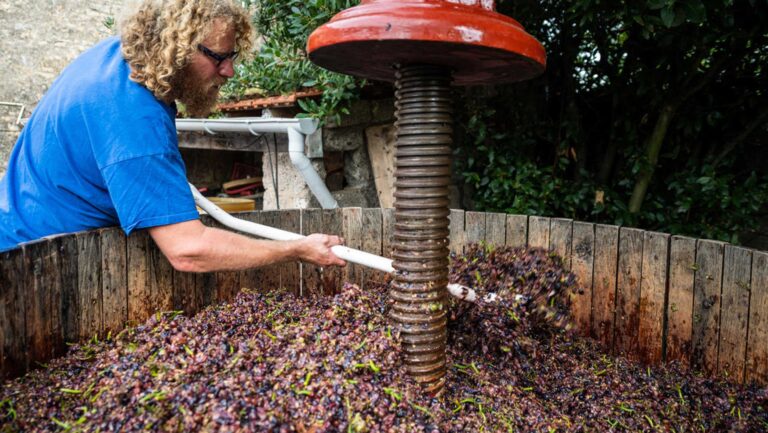
Aligoté has always been part of Pataille’s story; he harvested, pressed, and vinified his Aligoté plots separately from the beginning, despite not bottling them as such. “I took over a lot of Aligoté plots [in the early 2000s], as the fact that it was planted to Aligoté depreciated the plots terribly,” Pataille says, stating that many of his winegrowing friends no longer wanted to work with them due to lack of profitability. “It was a very gloomy time post-September 11th, and the world of wine was not that simple—though in those vineyards, I saw a treasure.”
Don’t miss the latest drinks industry news and insights. Sign up for our award-winning newsletters and get insider intel, resources, and trends delivered to your inbox every week.
Pataille recalls that nearly everyone around him called him crazy for keeping the Aligoté vines, rather than ripping them out. “When I have an idea, I can be pretty stubborn,” he says. “Everyone was tearing them out and I said to myself … it’s our history, it’s our DNA in Marsannay. These vines, they’re magnificent.”
Never one to follow market demand or trends, Pataille pursued his passions: working entirely organically (since 2007) and biodynamically (since 2008), as well showcasing his appellation’s unique terroir through the lens of Aligoté. After vinifying regional Bourgogne Aligoté for over a decade, Pataille says that it was ultimately the team at his Burgundy-based exporter Becky Wasserman & Co. that pushed him to pursue single-vineyard bottlings back in 2013.
Upon tasting Pataille’s first round of single-vineyard bottlings, the team immediately noted that the differences in terroir were evident, and the wines showcased an energy and expression beyond what they’d been witnessing in Chardonnay. “He brought what people wanted, he brought a lot of wine in the bottle,” says Paul Wasserman, the co-director of Becky Wasserman & Co. Over time, Pataille made a gradual move towards a more natural style of winemaking—a feat not many trained enologists were pursuing during the early 2010s.
“In a way, he was one of the first classic winemakers in the Côte d’Or to move in this direction without ever being dogmatic,” says Wasserman, describing Pataille as one of the benchmark producers to bridge the gap between the classic and natural winemaking worlds in a “very convincing way,” particularly through his continued use of ripe (“not crunchy”) fruit and restrained oak, meshed with a minimal intervention approach and little to no sulfur throughout the vinification process.
Finding Aligoté Advocates Across North America
Michael Feuerstein, the owner of Selection Pas Mal, was the first to bring Pataille’s wines into the U.S. back in the early 2000s. Upon recommendation from Becky Wasserman & Co, he committed to six cases of each cuvée and showed them around New York. “Michael immediately fell in love with Sylvain and saw his potential,” Wasserman recalls, stating that the first several vintages of Pataille allocation went directly to Feuerstein in New York. “It’s a very close and loyal relationship for all of us.”
In the early days, Feuerstein notes that no one really knew Marsannay or Aligoté, and the cost for Burgundy from the Côte d’Or wasn’t completely out of reach—meaning that buyers weren’t looking for lesser-known appellations to mitigate costs. “It was a different time, and Burgundy lovers were much more concerned with the famous villages,” echoes Wasserman. “The wines didn’t immediately fly off the shelf; it took a long time to get people to understand what they really were.”
Over time and investment in the U.S. market, the industry began to catch on. Feuerstein cites Richard Luftig (the former wine director of the now-closed Felidia), Crossroads Wine & Spirits, and Garnet Wines & Liquors as some of the earliest supporters of Pataille’s wines in New York. “Sylvain really gained a more widely developed following around 2015; that’s when we had to move to a strict allocation system to make sure all markets were satisfied,” says Wasserman. Though Pataille’s production has grown considerably since the early days, there’s still not enough to meet current demand.
Elsewhere, Daniel Veit, the wine director at Wally’s Wine & Spirits in California, and Kyle Payton, the owner of Ontario-based import company Meanwhile Wine, also became serious champions of Pataille’s wines. Veit specifically recalls a stateside chat with Pataille back in 2017 that left a lasting impression.
“I left that conversation thoroughly convinced that there is not a bigger advocate for the Aligoté grape and its potential for making exceptional, ageworthy wine from old vines,” says Veit. He believes Pataille’s commitment to responsible farming, low-intervention winemaking, and single-vineyard vinification forms the purity, energy, and clarity found in his wines.
“Once people experience the finesse and depth he coaxes out of Marsannay, they start to see the appellation in a whole new light and want to explore more,” Veit adds. “I don’t think producers like Charles Lachaux could sell an Aligoté bottling, Les Champs d’Argent, for $500 retail without people like Sylvain Pataille waxing poetic about the Aligoté grape.”
Sicilian wine phenom Arianna Occhipinti has become a modern icon with her terroir-centric winemaking practices and the elegant, singular wines they craft
How Arianna Occhipinti Won Over the Wine World
Though Pataille has become a pillar of winemaking in Marsannay, Payton feels that he is a “producer who floats above his appellation,” in that the wines taste more of their maker’s style than of an appellation stereotype. “Pataille’s wines are incredibly serious and pure wines that transcend those barriers,” he says. “If people view Marsannay as a place for cheap and cheerful Burgundy, Pataille’s wines would be the soul-touching sip that changes anyone’s perspective.”
Payton’s customers are enamored with Pataille’s work as well—and best of all, the bottles still remain within monetary reach (prices start around $45). “To see value and a quality-to-price ratio at this level in 2025 is almost unheard of,” he says. “Sylvain wants people to enjoy his wines, and he really shows that with his prices. I don’t think dollar-for-dollar you can find a better Burgundy.”
A New Side—and Soul—of Northern Burgundy
In Charleston, South Carolina, Matthew Conway, the owner and sommelier of The Tippling House, has found a similar reception among guests. The texture and soulfulness of Pataille’s wines make them attractive to new Burgundy drinkers and long-standing collectors alike. “We love to sell these wines, as they are a very high quality yet affordable entry into Burgundy, while also being a pioneer in terms of bucking conventional thinking in an often rigid place to make change,” he says.
Though beyond the wine itself, it’s the man behind the bottles that continues to strike a chord with customers around the world. “He’s an extremely conscientious farmer, but also such a smart, experienced, and warm person,” says Wasserman, citing his extraordinary personality and sense of humanity as a big reason behind his global success. “It makes us so happy to see that someone we love so dearly and truly admire is getting the attention and appreciation he deserves!”
Unsurprisingly, Pataille credits the team at Wasserman for his rampant success. “This wouldn’t have happened so quickly, and perhaps in such a way, without Becky [Wasserman],” he says. “In France, everyone said ‘I can’t sell that, I don’t want it,’ but right away, Becky said a big, big ‘yes,’” he says. Today, Pataille describes a sense of solidarity and healthy competition within the Marsannay appellation, one that he finds magical. “I’m very positive, both qualitatively and humanly,” he says. “Something’s happening in Marsannay.”
For Feuerstein, a sentiment similar to Wasserman’s rings true. “Sylvain is like my third son, as far as I’m concerned,” he says, describing Pataille as deeply intellectual and an all-around good guy. In Burgundy, most winemakers tend to have children prior to getting married due to complications that can arise from joint vineyard ownership, he says—though not Sylvain. “He’s one of the few guys I know that got married before he had children,” he says, emphasizing Pataille’s reverence for commitment and integrity. “He’s an incredibly loyal person, and above all, a very good friend.”

Dispatch
Sign up for our award-winning newsletter
Don’t miss the latest drinks industry news and insights—delivered to your inbox every week.
Vicki Denig is a wine, spirits, and travel journalist based between New York and Paris. Her work regularly appears in Decanter, WineSearcher, Food & Wine, and more. She also works as a content creator / social media manager for a list of prestigious clients, including Paris Wine Company, High Road Wine & Spirits, Becky Wasserman & Co, and more.