The beverage landscape is constantly evolving. New beverages may come into the world in order to fill a perceived gap in the market, to capitalize on a growing trend, to bring attention to the bar or bartender behind them, or simply because their creators are passionate about introducing a new flavor or technique.
But bringing a new product to the market is no easy task. It involves a great deal more than just a good idea, and many more people than just a single mastermind. New products can be the work of established brands that are constantly innovating, corporate beverage agencies working with creators and entrepreneurs to handle every aspect of the process, or niche micro-producers whose bottles are only bound for local distribution or e-commerce.
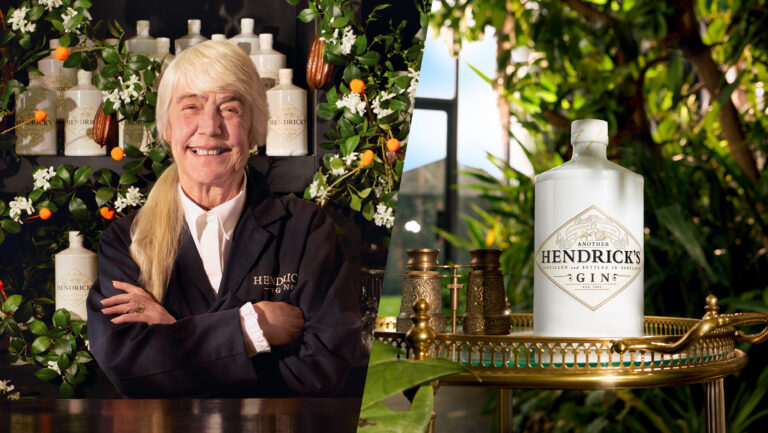
“No two days are ever the same, because I’m always experimenting with different things,” says Lesley Gracie, the master distiller of Hendrick’s Gin. Even as an established brand, Hendrick’s is still in the product development business, having recently launched its second permanent SKU, Another Hendrick’s, in addition to its semi-annual Cabinet of Curiosities releases. “You’ve got to keep moving forward,” she says.
Don’t miss the latest drinks industry news and insights. Sign up for our award-winning newsletters and get insider intel, resources, and trends delivered to your inbox every week.
Regardless of format and type of liquid, beverage product development involves a number of crucial components representing creative, logistical, and administrative decisions and steps—which don’t always follow a prescribed, linear path—to ensure that a product is viable on multiple levels. It’s also a multiplayer enterprise, where the day-to-day operations are very different depending on what role someone plays in the creation of new products.
“[Second Sip] is a very small project with a fairly small budget,” says Nick Strangeway, one of the cofounders of the low-proof gin. “But it’s a pretty big team,” he says, estimating that between those on the business side and those involved in formulation and creation, “dozens of people have worked on it.”
From RTDs and small-batch amari to spirits and liqueurs with global launches, there are many steps between the initial spark of an idea and its placement as a fully realized SKU on a retail shelf or backbar. SevenFifty Daily spoke with the forces behind a variety of new products about the vital players and components involved in beverage product development.
Developing the Product Concept
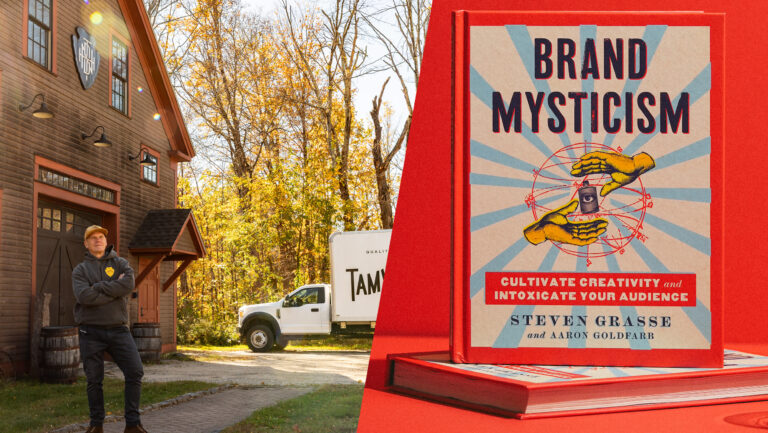
The first phase of a new beverage product is to determine a distinct angle or market need to justify its development. “Our best products have a one-sentence elevator pitch,” says Steven Grasse, the co-author of Brand Mysticism: Cultivate Creativity and Intoxicate Your Audience, and the founder of branding agency Quaker City Mercantile. “Sailor Jerry is a punk rock Captain Morgan. Hendrick’s evokes a Victorian apothecary. The Pathfinder is ‘fernet without regret.’”
Every project examined here began with a clear concept—whether it was market-led or liquid-led—that ultimately directed who and what would be involved, no matter how large or small-scale the operation.
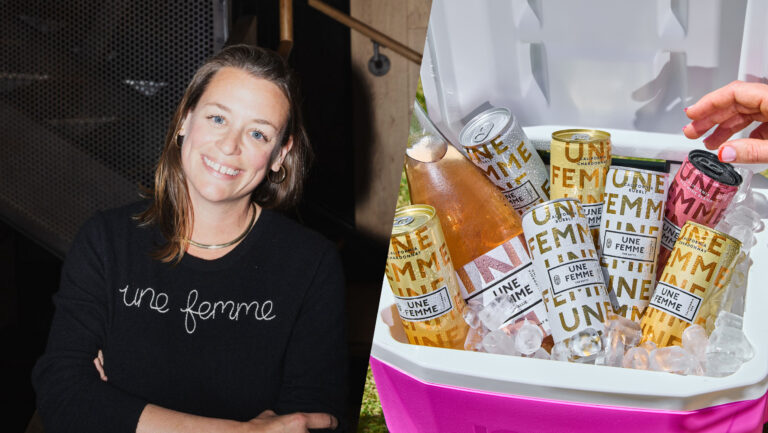
“I started [Une Femme] because at both my [former] Champagne bars in New York and San Francisco, our top-selling wines by the glass were women-made wines, and a lot of our customers would ask us, ‘how can I know if a wine is made by a woman winemaker?’” says Jennifer Pelka, the brand’s cofounder.
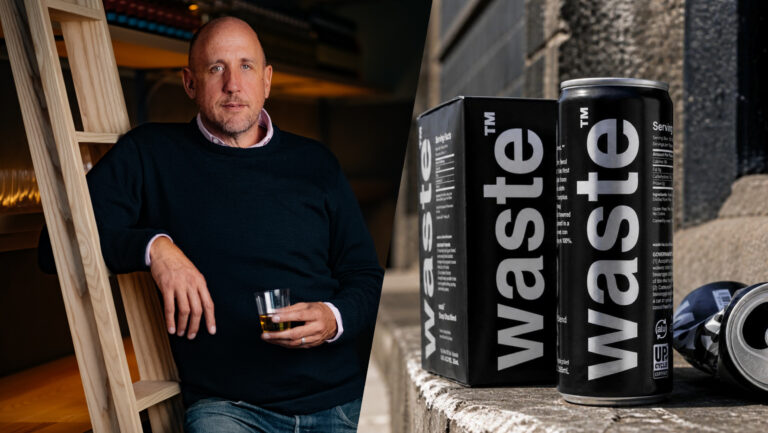
Waste, a canned cocktail RTD, began with a designer’s fully realized packaging idea before any liquid came into play. “In the abstract, with no expertise in the category, [the designer] thought, ‘wouldn’t it be cool if we could do a canned drink made from waste,’” says Thad Vogler, the founder of Bar Agricole, who was brought in to develop the liquid from reclaimed or upcycled ingredients.
As a bar owner and micro-distiller, “the idea was to create small distillates from unique flavors that we could utilize on the bar program,” says Ektoras Binikos, the founder of Atheras Spirits and owner of Sugar Monk and Bitter Monk in New York City. “It’s a beacon for us to have our own line of spirits,” he says. “People come for that.”
For brand agencies such as Quaker City Mercantile, new products begin with a fully outlined concept, before any liquid experimentation begins. “The concept needs to be really tight and nuanced,” says Grasse. “Any new brand starts with the same three things: highly differentiated liquid ingredients, great packaging, and a unique brand world, and they all need to work as one idea.”
Creating and Refining the Liquid
The development of the beverage typically represents a majority of the work, which can take place over months or even years. Some brands or developers have their own labs, test kitchens, or other facilities in which to tinker with recipes and formulations, while other beverage entrepreneurs or brand creators rely on contract producers or liquorists to realize a vision.
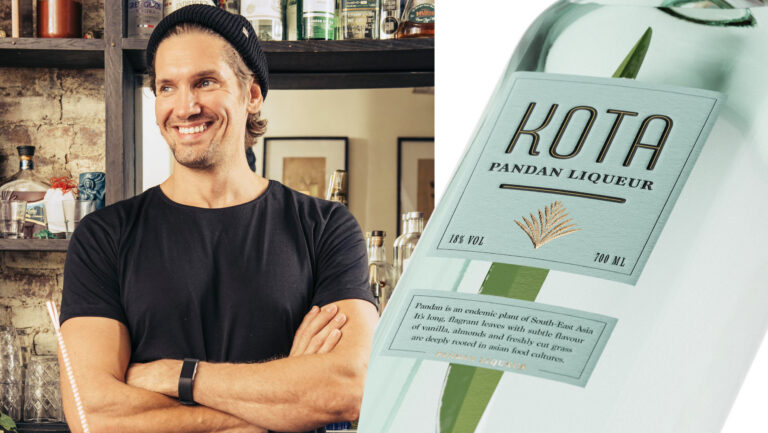
Kota is a pandan liqueur founded by Nico de Soto, a global bartender and bar creator credited with popularizing the Southeast Asian herb as a cocktail ingredient worldwide. He worked with liquorist Maison Gabriel Boudier, renowned for its work on products such as St-Germain and Chambord, to bring pandan in a bottled format to the beverage marketplace. “I was very specific with what I wanted [in the finished product], which was grassy, nutty, and not green,” says de Soto. With over 750 varieties of pandan available, developing nuances of flavor and intensity for Kota required months of experimentation, with samples shared after each iteration to determine what would be the next adjustment in order to achieve the ideal flavor. From idea to bottle, “it took about a year and a half,” says de Soto.
“Second Sip actually ended up taking about a year to get somewhere where we were happy with it,” says Strangeway. Along with one of his cofounders, Leo Robitschek, “we pretty much agreed on almost every botanical that we were going to include, so it was easy to get to the point where we had an idea of what we thought the flavor might be,” he says. “But then you have to make it.”
Working with colleagues at beverage agency Crucible, Strangeway initiated “small-scale productions, experimentations with different botanicals, adjustments of ABVs, and also trials with additives post-production,” he says. “Working at half-ABV was a new thing, so [Crucible] ran thousands of distillations for us, which we would taste, and if we weren’t happy with them, we’d try to analyze why we weren’t happy with them.”
The formulation process of new beverage products may also involve mixing in cocktails before the codification of the final recipe. “I’ll take it to a point where I think it’s a nice balanced liquid, and then I’ll put tonic in it,” says Gracie. “Then if I’m happy with it at that point, what I typically do is get the global brand ambassador, and then we’ll start to do cocktails with it as well.”
“If [Second Sip] did not stand up in a martini, it wasn’t really going to be a successful product,” says Strangeway.
From Prototype to Production
Beyond small quantities of ingredients needed for experimentation, which may come from homemade macerations, infusions or flavor house samples, the process of scaling up a new idea for production frequently involves new players and more experimentation.
Atheras’ line of botanical liqueurs and amari relied on foragers in both New Jersey and Greece, who served both procurement and advisory functions for the brand. “Our forager [Tama Matsuoka Wong] knows a great deal about seasonality and availability, and also about toxicity,” says Binikos. That expertise also comes into play when it comes to regulatory matters for new products.
“I’ve always got to be thinking that if I want to do something, it’s got to be realistic at the plant scale as well as the lab scale,” says Gracie. “I’ve got to be able to source everything commercially unless it’s a very tiny ingredient.”
For Waste, which relies on food waste or other reclaimed or repurposed ingredients, “it’s a supply chain puzzle, more than an aesthetic one,” says Vogler. “I need a flavorless alcohol, and then I can plug and play,” he says. The benefit of that approach is that the product can be adapted to whatever ingredients are available in a given market. In California, for example, formulations might draw on excess grapes or wine supply, while in the Midwest, products might incorporate surplus grains.
Developing Packaging and Brand Identity
Whether part of the initial concept or an idea that’s worked out in later stages, packaging and brand storytelling are a crucial piece of a product’s development.
“Once we get the liquid sorted, the marketing team then gets the story,” says Gracie, explaining how important it is that marketers “understand how we’ve got to the point of where we are with that liquid” in order to shape design elements and a rollout campaign.
Une Femme began with a specific tagline: “pairs well with fun,” which helped target its audience. “When we think about which accounts to go after from a sales perspective, it’s places like hotels, rooftops, poolside arenas, stadiums, event venues, golf courses, cruise ships, et cetera,” says Pelka.
An account also initiated the brand’s move into formats beyond the 750-milliliter bottle and other design decisions. When Delta Airlines requested a canned version of Une Femme following a promotion for Breast Cancer Awareness Month, the wine brand delivered the new format with a simple detail: different color pull tabs for each flavor in the canned collection. “Flight attendants need to be able to differentiate between them from the top down when they pull out a drawer. That saves them so much time,” says Pelka.
Navigating Compliance and Regulatory Requirements
Ensuring that a new product meets legal requirements and standards, across states as well as different countries, both in its formulation and in its packaging language, is also a major aspect of product development. Even for a small project, “it’s a very complicated process to put forward a product in terms of getting all the permits that you need from the government,” says Binikos. “You have to go through so many agencies.”
Une Femme only has a small team of full-time employees, “but I would say that the person who’s most heavily involved day-to-day is our compliance person,” says Pelka, noting that the compliance agent is responsible for ensuring the brand meets the Alcohol and Tobacco Tax and Trade Bureau requirements. “There are always tweaks that we have to make,” she says, both in releasing new products within the brand, and even in small variations in formulation and packaging that necessarily take place on a seasonal basis for a wine brand.
Brand agencies such as Boudier often handle the compliance component, as they did for Kota, which is an even larger consideration for brands with global reach. “It’s a lot of legal work behind the scenes,” says de Soto. Depending on the market, “sometimes you need to change the volume of the bottle, from 750-milliliters bottles for the U.S. to 700-milliliters bottles for Europe, and sometimes labels need to be entirely translated.”

Dispatch
Sign up for our award-winning newsletter
Don’t miss the latest drinks industry news and insights—delivered to your inbox every week.
Pamela Vachon is a freelance writer whose work on food, beverages, travel, and especially the intersection of those elements has appeared in Food & Wine, Wine Enthusiast, Travel & Leisure, VinePair, and Bon Appétit, among others. She was formerly a bartender and captain at New York’s The Modern, and teaches classes at Murray’s Cheese. She splits her time between London, New York, and Castlerea, Ireland, where she hopes one day to make cheese.