The 1793 depiction of Naples’s Gulf of Pozzuoli by landscape painter Jacob Philipp Hackert shows how the historical alberata vine-training system was seamlessly integrated into the landscape. Its vines intertwined with the trunks and branches of poplars, elms, and maples, draping the landscape in a majestic, verdant scaffolding whose fruits required custom-made ladders and specialized tools to harvest.
The alberata was once widespread across several parts of Italy and remained common around Naples until the late 20th century. Today, however, only a handful of hectares remain, replaced by the more efficient and highly mechanizable systems such as Guyot and vertical shoot positing.
Countless historical vine-training methods worldwide have been facing similar pressures, caught between soaring labor costs, the advance of mechanization, the need for greater efficiency, and the depletion of traditional know-how. Their decline mutates historic landscapes, but it also weakens local economies by eroding a distinctive attraction for visitors; diminishes cultural heritage through the loss of ancestral knowledge; and reduces the very viticultural diversity that’s proving essential in adapting to climate change. Their decline, however, has not been uniform, as region-specific factors continue to play a decisive role in determining their fate.

Don’t miss the latest drinks industry news and insights. Sign up for our award-winning newsletters and get insider intel, resources, and trends delivered to your inbox every week.
The Volcanic Hoyos of Lanzarote
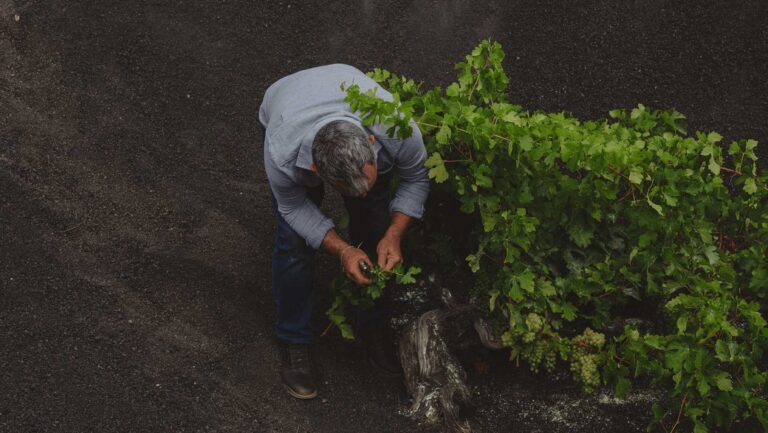
The hoyo system remains one of the most widespread vine-training systems on the Spanish island of Lanzarote, just off the coast of Morocco. It was developed following six years of relentless volcanic eruptions (from 1730 to 1736), which buried much of the island’s fertile central plains under a thick layer of small fragments of volcanic rock known as lapilli. Hoyos are deep pits that allow roots to reach the organic soil beneath the ash and shield the vine from Lanzarote’s strong winds, while the surrounding lapilli traps the island’s scarce moisture and release it gradually to the plant.
Intrigued by the almost extraterrestrial landscape that this historical viticulture creates, with the vivid green of the vines contrasting with the black volcanic ground, travelers flock to Lanzarote. By contributing to Lanzarote’s booming tourism sector—the island’s major economic driver—the hoyo enjoys strong winegrowers support. “Thousands of tourists visit us to see it and experience it for themselves,” says Alberto González Plasencia, the owner of Bodegas Timanfaya. “If it were to disappear, those tourists would stop coming, and our wines would lose value.”
Despite the popularity of this historical vine-training method, its exceptionally high labor demands are beginning to threaten its long-term survival. “Traditional viticulture here is highly labor-intensive and requires specialized expertise,” says Juan Glaria, the winemaker of Bodegas Rubicon. “The hoyos require constant maintenance, and all the work must be carried out manually. You need to climb in and out of the pits constantly and, with planting densities so low, even working a single hectare takes a very long time.”
Plots are increasingly being left abandoned as a result: between 2000 and 2026, Lanzarote’s active vineyard surface shrank by nearly 19 percent, dropping from 2,326 hectares to just over 1,889. Some larger producers are even shifting to conventionally trained, irrigated vineyards. In an attempt to slow the decline, local governments have recently introduced subsidies. Some winegrowers argue these measures may still fall short, yet they do reflect a broader recognition of the crucial role Lanzarote’s historic viticultural landscape plays in the island’s economy, and a growing commitment to securing its long-term viability.
Doubling Down on Pergolas—or Not
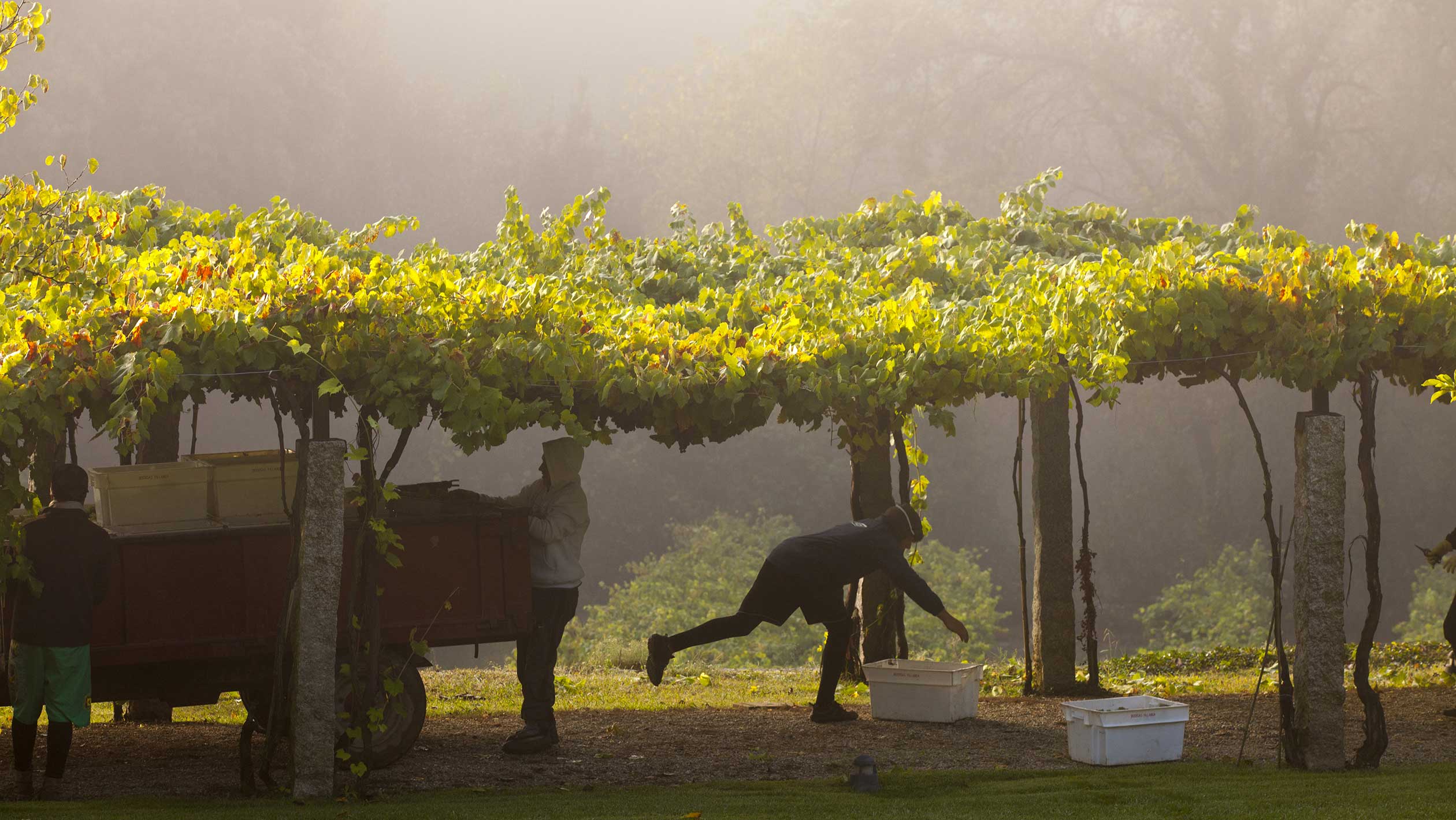
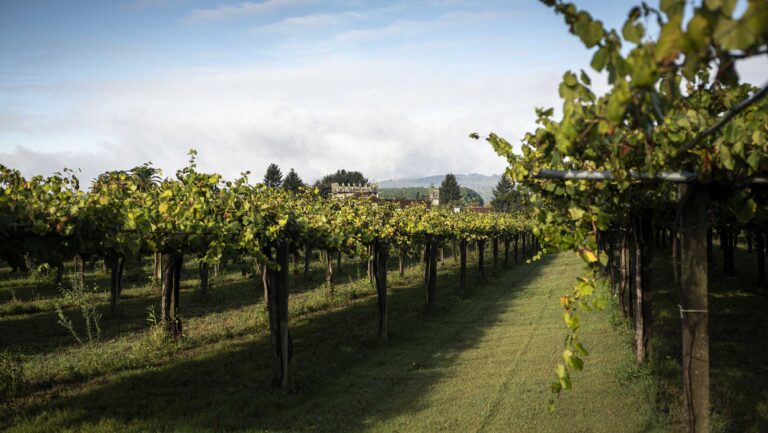
In Spain’s wetter north, the pergola method, known locally as emparrado, remains the gold standard for high-quality Rías Baixas Albariño. While it faces the same labor-related challenges as other traditional vine training systems, the integration of specialized viticultural tools and the added cultural and historical value it can bring to the final wine means that many growers remain committed to maintaining it.
Familia Torres’s Pazo Torre Panelas, for instance, produces its highly regarded Blanco Granito from six hectares of traditional pergolas located within the premises of the historic estate. “We now use machinery specifically adapted to pergola training for mowing ground cover, applying manure, leaf removal, and similar tasks, so in these respects managing it is no more labor intensive than working with a trellis system,” says Mauro Sirvent, the head of agricultural production for Familia Torres. “Then, the Rías Baixas DO does not allow mechanized harvesting in any of its vineyards, so in terms of picking, all training systems require the same level of manual work anyway.”
On the plains between Venice and Treviso, a 19th-century pergola-alberata hybrid known as bellussera has not proven equally viable. “This system allowed for the cultivation of fodder for livestock and other crops at ground level, while also supporting silk production, thanks to silkworms feeding on the leaves of the mulberry trees used to support the vines,” explains Stefano Quaggio, the director of the Consorzio Vini Venezia.
The decline of the local silk industry and the disappearance of subsistence agriculture rendered the labor-intensive bellussera effectively redundant. Gradually, landowners transitioned to more modern, easily mechanizable solutions, a shift made especially convenient by Veneto’s predominantly flat topography. Today, bellusera vineyards cover just nine percent of the Piave DOC (the denomination with the area’s highest concentration), and the figure continues to decline. But climate change and tourism could be offering it a second lease on life. “Bellussera vines tend to withstand the increasingly erratic climatic conditions a lot better, and therefore can offer more stable and reliable quality year after year. But winemakers can also use it to generate additional economic value through wine tourism,” says Quaggio.
The survival of the bellussera, and of other historical vine-training systems more broadly, can only be secured through adaptation to local needs and realities via a delicate negotiation between heritage, society, topography, and progressively acute economic pressures. How individual winegrowers and entire regions strike this balance is highly region-dependent, but any successful approach will collectively contribute to preserving a tangible record of rural histories and maintaining a diverse global viticultural landscape in the face of growing trellised uniformity.

Dispatch
Sign up for our award-winning newsletter
Don’t miss the latest drinks industry news and insights—delivered to your inbox every week.
Dr. Jacopo Mazzeo is a U.K.-based freelance drinks journalist, consultant, and photographer. He contributes to leading trade and consumer publications including Decanter, Wine Enthusiast, Whisky Magazine, and Good Beer Hunting. Jacopo consults on consumer trends and marketing strategies, is a former sommelier, and judges international wine, beer, and spirits competitions. Before he embraced full-time journalism, he studied musicology at the University of Bologna and took a PhD at the University of Southampton. Follow Jacopo on Instagram @jacopomazzeophoto