As the wine industry navigates a challenging economic landscape, including ongoing market disruption, fluctuating tariffs, distributor consolidation, and shifting consumer preferences, many producers are reassessing their brand identities.
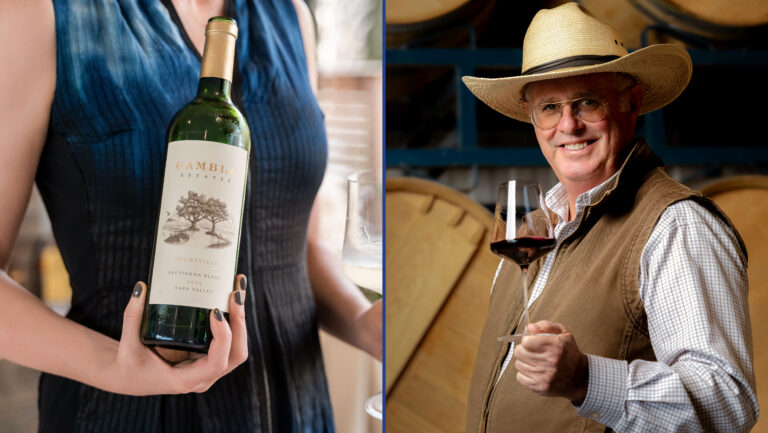
“We don’t have a crystal ball,” says Tom Gamble, the founder and vigneron of newly rebranded Gamble Estates (formerly Gamble Family Vineyards) in Napa Valley. “[A decade ago] we did not anticipate the industry downshift; we saw it in our own numbers and knew we needed radical change.”
“Our job every day is to wake up and to think about how to sell our wine,” says Olivier Souvelain, the CEO of Provence’s Gassier. “And during the last 10 years, everything moved, everything changed, and we decided we needed to give Gassier not necessarily a new identity, but a new philosophy, a new positioning.”
Don’t miss the latest drinks industry news and insights. Sign up for our award-winning newsletters and get insider intel, resources, and trends delivered to your inbox every week.
For some wineries, that means a simple visual refresh with an updated label design or new bottle shape intended to grab attention. For others, it signals a deeper transformation, spanning packaging, positioning, audience targeting, pricing strategy, and even the brand’s name. Regardless of the depth or breadth of a given rebrand, though, the goals for many producers undertaking a new look are very similar.
“The objectives of our redesign were to stand out in a category where many wines can look very similar on shelf; to reinforce a strong and recognizable identity [that is] anchored in our own history; and to create coherence across the full range, ensuring all wines feel part of the same family,” says Lourdes Bustamante, the director of communications for Rioja’s Bodegas Montecillo. Ultimately, these objectives should lead to increased profits, further reach, and future-proofing in an increasingly turbulent atmosphere.
SevenFifty Daily spoke with representatives from five wineries that have rolled out new looks or brand identities since 2024, and who have all reported growth attributable to their respective initiatives, for insight into the strategic moves and decision-making that went into ensuring successful outcomes. In terms of their success, consider the following statistics and trends:
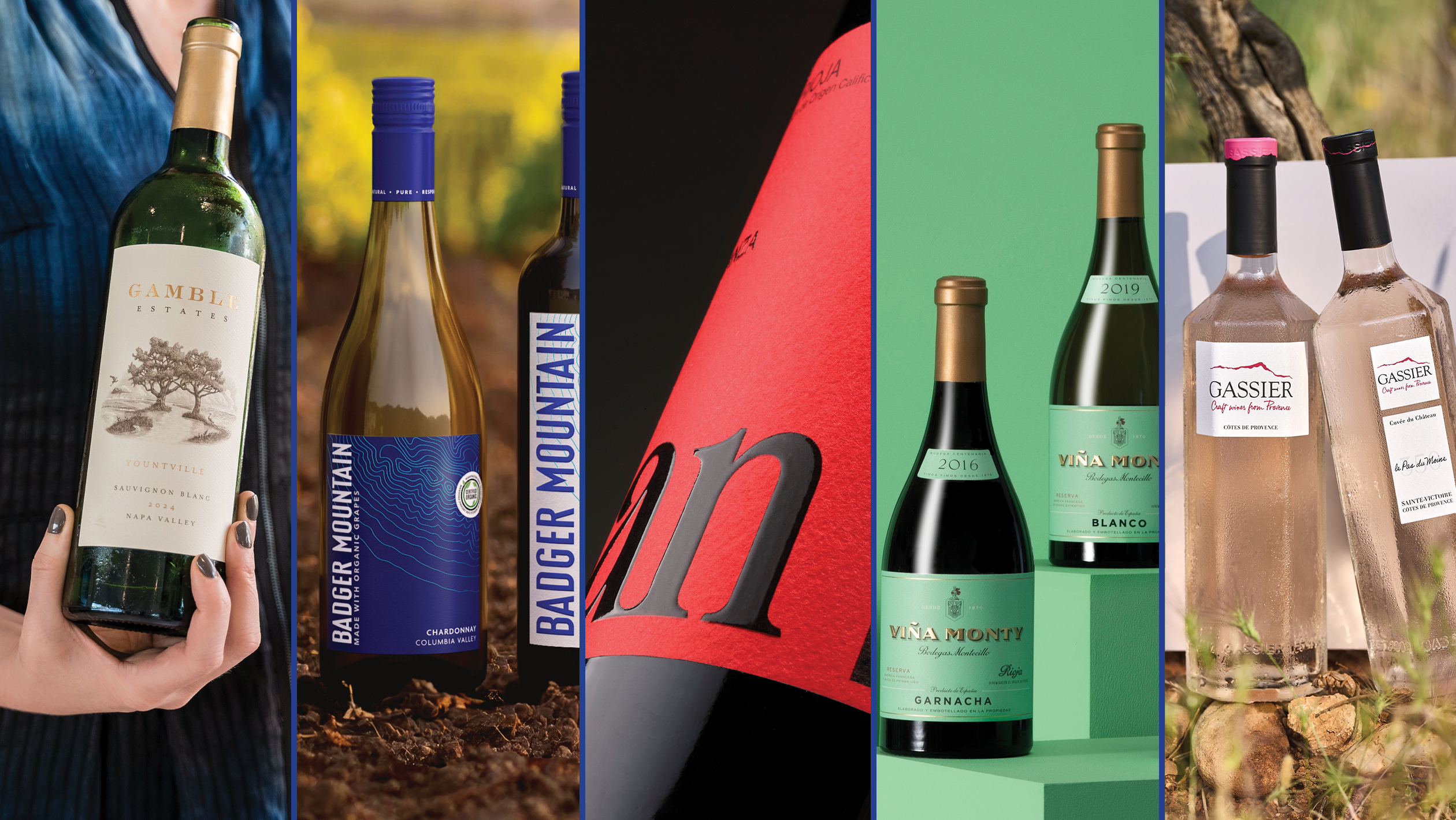
Gassier’s sales increased over 40 percent in 2025 due to the rollout of their new label design and bottle shape. Gamble Estates reported significant growth in many meaningful target areas, including average spend per customer, club signups, and tasting room sales. Bodegas Montecillo grew five percent in the first year of their rollout redesign (2024), and an additional three percent in 2025. Washington’s Badger Mountain secured new distributor partnerships due to their new look, and is forecasting 20 to 25 percent growth in sales in 2026 as those bottles begin to hit shelves, despite recently closing their tasting room and focusing on direct-to-consumer sales and memberships. Rioja’s Bodegas Lan reported the strongest sales in their 50-year history in 2025, following the mid-year rollout of their new style.
1. Build a Stronger Brand Story
The overarching element among these winery rebrands was the desire not only to capture attention with new design choices, but to communicate something vital to the consumer—beyond strictly practical information—within their new looks.
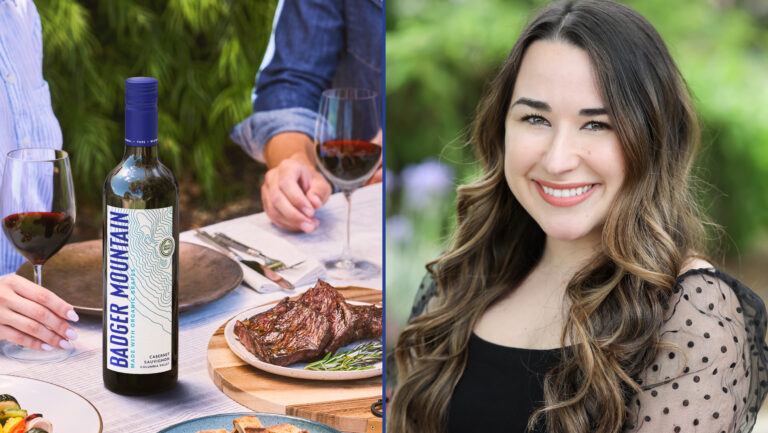
In several cases this was an element that had always been part of the brand’s identity, but that perhaps merited more attention. For example, “in developing the new look, we focused on incorporating elements that reflect our identity and sense of place,” says Bella Pablo, the direct-to-consumer sales and marketing manager for Badger Mountain. “As the first USDA-certified organic vineyard in Washington State, that connection to land is central to our story. The new labels feature a topographic map inspired by Badger Mountain and our estate vineyard, which visually reinforces that origin.”
The shift from Gamble Family Vineyards to Gamble Estates also leaned into the estate nature of the business, with new labels featuring larger, more evocative imagery in addition to the new name to better signal the connection to the family property. It was also an opportunity to signal some of the brand’s core values. “We approached this as a holistic brand and sustainability project,” says Bryan Koeberer, the CFO and COO. “The packaging decisions [in Gamble Estates’ redesign] were about tangible impact: lighter glass, more recyclable inputs, and more efficient logistics. Our aim is that when someone picks up a bottle of Gamble Estates, the first impression—lighter‑weight yet still substantial glass, thoughtful materials, a beautiful illustration on the label—is an honest preview of what’s behind it: estate‑grown fruit, careful winemaking, and a long‑term commitment to Napa Valley’s ecosystems.”
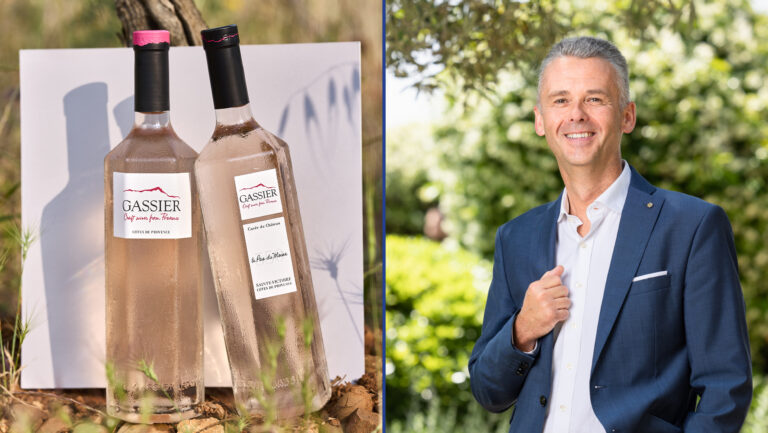
Gassier’s new hexagonal bottle not only stands out among Provençal rosés, but is a tangible representation of six generations of winemakers, as well as a nod to its distinctly French identity. (L’Hexagone is a common nickname for France among its citizens.) Bodegas Montecillo’s signature green was a resurrection of a historical style, a nod to the brand’s longevity.
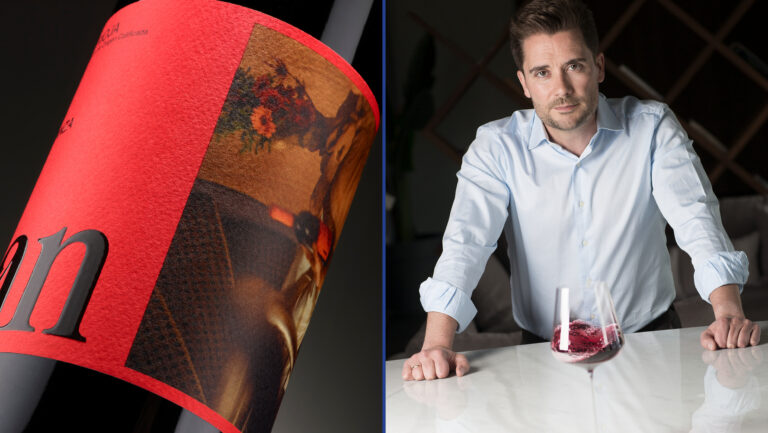
On the other hand, in crafting a new narrative, Bodegas Lan simplified and modernized their front labels, offering a more lifestyle-driven feel on the back of the bottle with imagery designed to connect the consumer to imagined moments. “We didn’t want to fill people’s heads with technical information about variety, about how many months in barrel,” says Alberto Saldon, the brand’s director of marketing. “We were looking to evoke more emotion and attitude,” he adds, noting that the imagery puts the focus on the consumer experience, rather than the product itself.
2. Use Research to Guide Repositioning
Not every producer here began with substantial market input ahead of their redesigns, but those with the largest overhauls in their branding and marketing strategies began the planning for their respective rollouts years in advance, actively seeking information in order to best tailor their changes to meet consumer needs and expectations. Gamble Family Estates, Bodegas Montecillo, and Bodegas Lan all solicited consumer feedback in this way.
“In 2021, we commissioned a 600-person survey of existing and potential supporters,” says Gamble, which revealed what aspects of the brand were most important to their existing fans: “Our warm hospitality and continued support beyond the first interaction; our quality-to-price ratio; and our authentic story of generations of farming our family-owned vineyard estates. That story, if not told in person, was hard to translate with the existing packaging, which was failing in a crowded retail environment and thick wine lists.”
Two years ahead of its 2025 rollout, Saldon began conducting research for Bodegas Lan in order to understand how to create broad appeal for a 50-year-old winery in a classic but not trendy region, establishing that the greatest potential for growth was among a core target audience deemed to be enthusiasts—those positioned between the merely wine curious and classic wine consumers. Representing about 30 percent out of Spain’s estimated 15 million people who are drinking wine at least once a month, “these are people who are between their 30s and 50s, who are not wine experts but maybe are a little bit foodies,” says Saldon. They’re not necessarily brand-driven, but are open to discovering something new. Importantly, “they’re able to spend some money on wine or gastronomy,” he adds.
In kind, Bodegas Lan tailored its rollout of eight new bottle looks divided into three categories for three different demographics: three bottles featuring brighter colors, lifestyle imagery, and entry-level prices for the wine curious; warmer colors and winemaking imagery for its core range targeted to key wine enthusiasts; and elegant, black-and-white imagery for the Reserva and Gran Reserva expressions expected to appeal to classic wine drinkers and existing Lan fans.
“Nothing is random,” says Saldon. “Everything is in response to our findings in the emotional impact study we undertook in order to create a brand driven by emotion.”
3. Tie the Rebrand to a Defining Moment
Many brands timed their redesign rollout to an anniversary or other significant moment as organic opportunities to bring attention to the brand on multiple fronts.
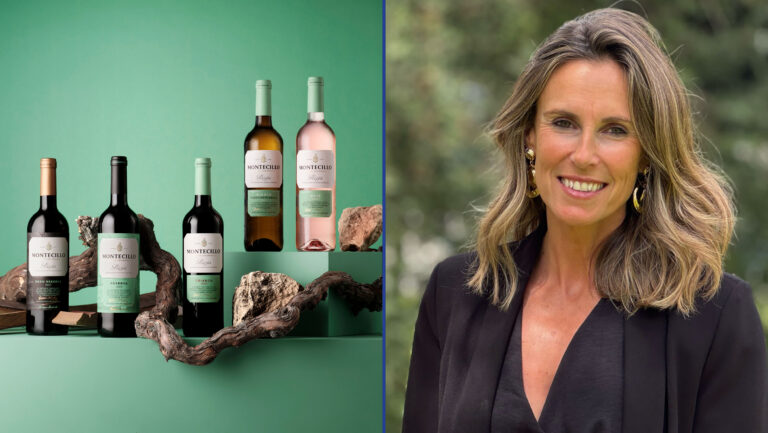
“The 2024 label redesign is the result of a longer strategic journey that began in 2020 with the relaunch of our Viña Monty range, coinciding with Bodegas Montecillo’s 150th anniversary,” says Bustamante. “That project marked a return to our historical roots, most notably through the recovery of the winery’s signature green tone.” The tone first made its appearance in 2020, with the complete redesign across all bottles rolling out in 2024.
“The rebrand to Gamble Estates coincided with our 20th anniversary,” says Koeberer, “along with a sharpened focus on estate‑grown wines from Oakville, Mount Veeder, Rutherford, and Yountville. We also wanted the physical package to signal that evolution.”
Gassier’s new bottle was also inspired by the entrance of its sixth generation to the winery, as a moment worth marking. “George Gassier, the fifth generation, is in my team today,” says Souvelain. “And his son, Jean, who is 21, has come to work with his father and will move forward as the sixth generation. So when we decided to give new positioning to Gassier, we wanted to emphasize the family in some way.”
4. Design for Differentiation
Ultimately, while many of these brands’ new labels offer subtle cues to their identities, values, and intentions, strategic rebranding initiatives are also driven by a need to grab attention in not-so-subtle ways, where bold design elements are used as points of differentiation.
To stand out on shelves, Bodegas Lan, Badger Mountain, and Bodegas Montecillo all relied heavily on color. “When you look at a typical retail wine section, you often see a sea of white labels with minimal text or small design elements and our previous labels fell into that category,” says Pablo. “We knew we needed to create something more visually engaging that would capture a shopper’s attention while still staying true to who we are.” While Badger Mountain’s font and accent color remained the same, in the redesign its vivid cobalt blue was employed to do more of the work in capturing consumer attention.
The same holds true for Bodegas Montecillo. “This distinctive mint green was originally used by the Navajas family for Viña Monty wines, and it is deeply tied to our heritage in Fuenmayor,” says Bustamante. “Over time, like many Rioja wineries, we had moved toward more conventional Rioja color codes—reds, blues, and blacks—but we felt it was time to reclaim something uniquely ours,” she adds, explaining that would especially set it apart among other brands in the region.
Not only is bottle shape an effective attention-grabbing device, as with Gassier’s well-performing hexagon, but even bottle size can be used strategically in a rebrand. “To meet the evolving preferences of Generation X and millennial consumers, we introduced a 375-milliliter half‑bottle format to lower the barrier to trial and better align with emerging consumption patterns,” says Gamble. “We also began offering 50-milliliter tasting flights, around our club releases, to support both retention and acquisition.”
While every winery here has already reported promising figures and trends due to their rebranding initiatives, the proof of the efficacy will be in the years to come, during which time many other brands will surely follow suit. “It is a very long journey to transform a brand,” says Saldon. “We are not in a hurry, but we will continue to look for signals that things are going in the proper direction.”

Dispatch
Sign up for our award-winning newsletter
Don’t miss the latest drinks industry news and insights—delivered to your inbox every week.
Pamela Vachon is a freelance writer whose work on food, beverages, travel, and especially the intersection of those elements has appeared in Food & Wine, Wine Enthusiast, Travel & Leisure, VinePair, and Bon Appétit, among others. She was formerly a bartender and captain at New York’s The Modern, and teaches classes at Murray’s Cheese. She splits her time between London, New York, and Castlerea, Ireland, where she hopes one day to make cheese.